






Articles
Free Read: Russia's Oil: Sanctions, Shadow Fleets, and the Iran Windfall
By Osama on March 25, 2026 in Free Articles
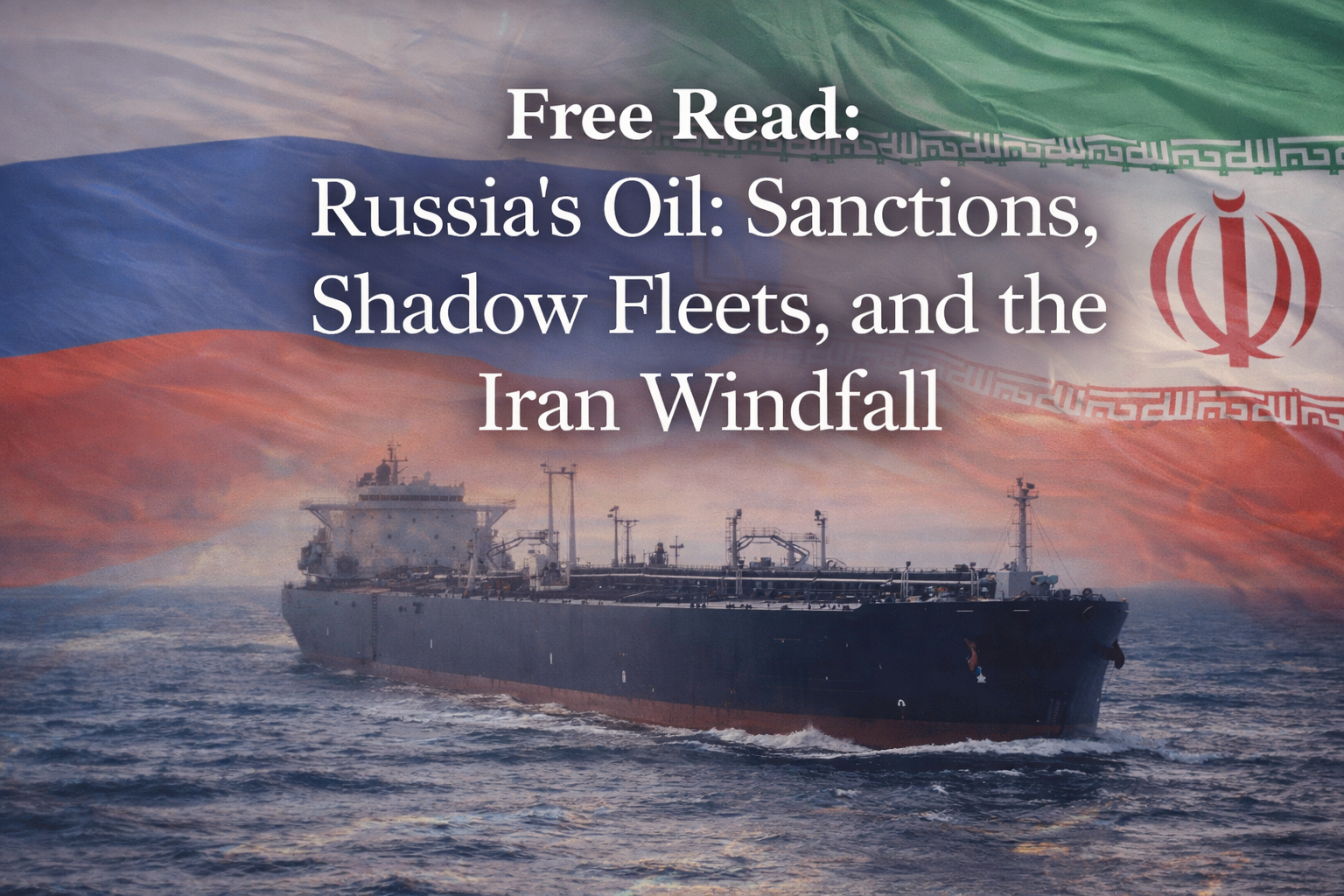
For most of early 2025, western enforcement against Russia's shadow fleet appeared to be gaining ground. Vessels were being blacklisted at pace, flag states were being pressured to clean up their registries, and over a dozen ships were seized between December and February. The net, for once, seemed to be tightening. Then Iran changed everything.
The US and Israeli strikes on Iran in late February 2026 disrupted oil flows through the Strait of Hormuz and sent crude prices sharply higher. Almost immediately, Washington began unwinding the sanctions architecture it had spent months building. A 30-day waiver allowed Indian refiners to purchase Russian oil stranded at sea. Treasury Secretary Scott Bessent described it as a temporary stop-gap. One former US Treasury official was less charitable, calling it "a gift to Vladimir Putin" that would make only a marginal difference to global oil prices. What it did do, concretely, was reopen the Indian market to Russian crude at a moment when Moscow needed it most.
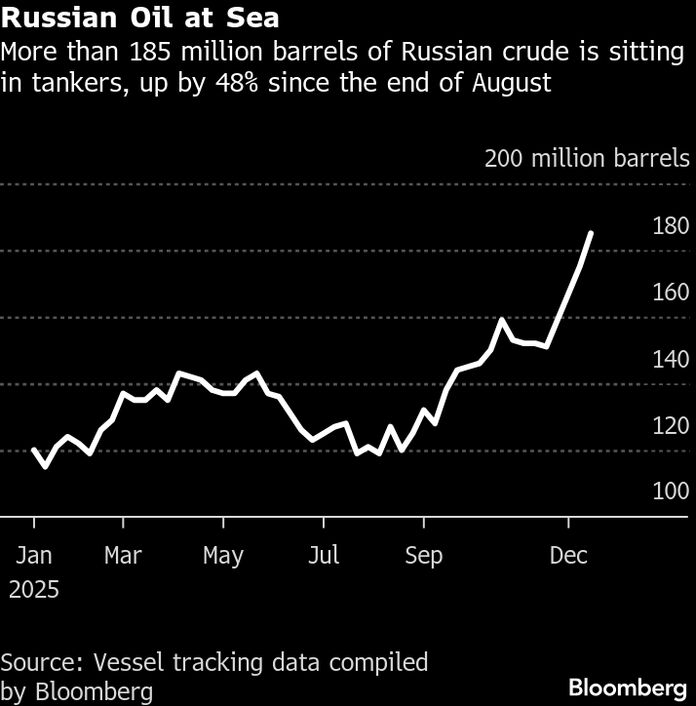
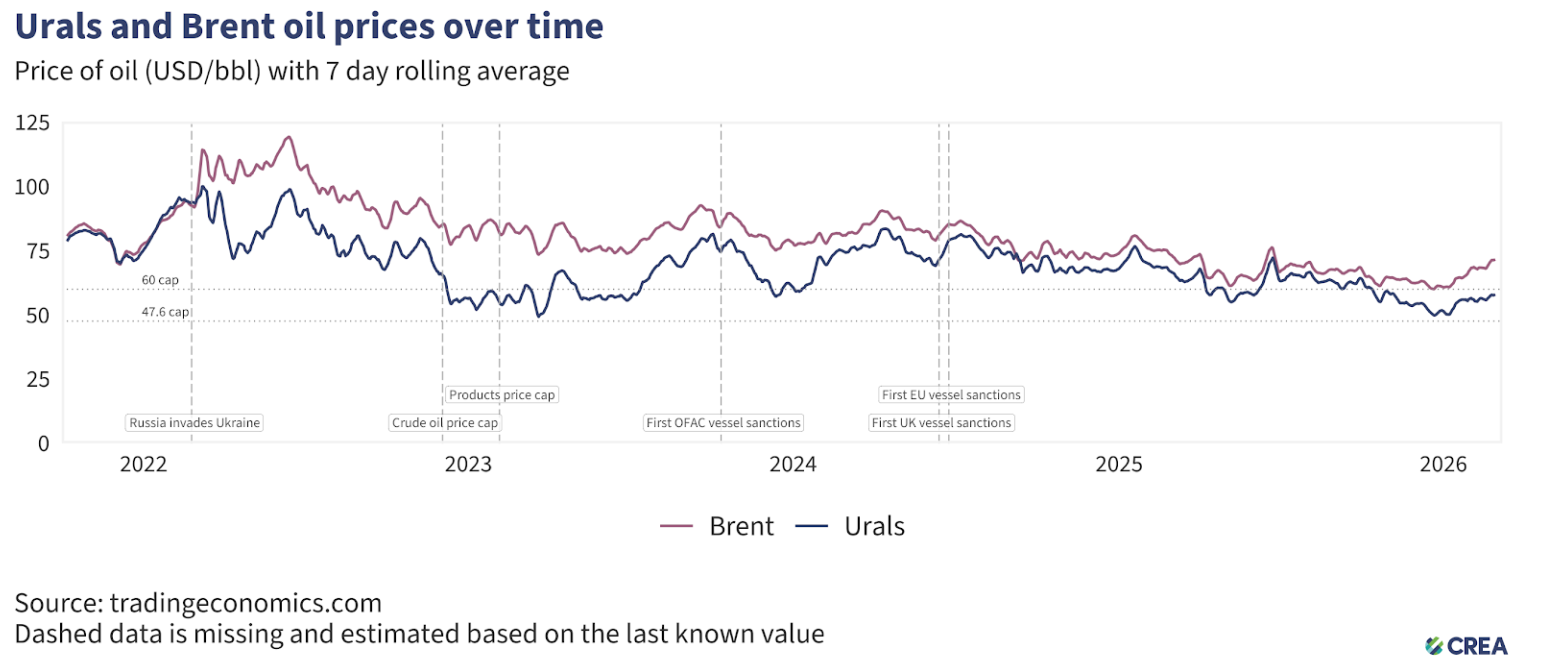
Russia had entered 2026 under real pressure. Sanctions on Rosneft and Lukoil had spooked Indian buyers. The Jamnagar refinery — one of the world's largest — had stopped receiving Russian crude entirely in January. Urals crude was trading at a steep discount to Brent, meaning Russia was moving barrels but earning less per barrel than it would prefer. And yet, even under those conditions, Russian fossil fuel revenues ran at EUR 492 million per day in February 2026 — a 7% increase on the previous month. The sanctions were biting at the margins, not at the core.
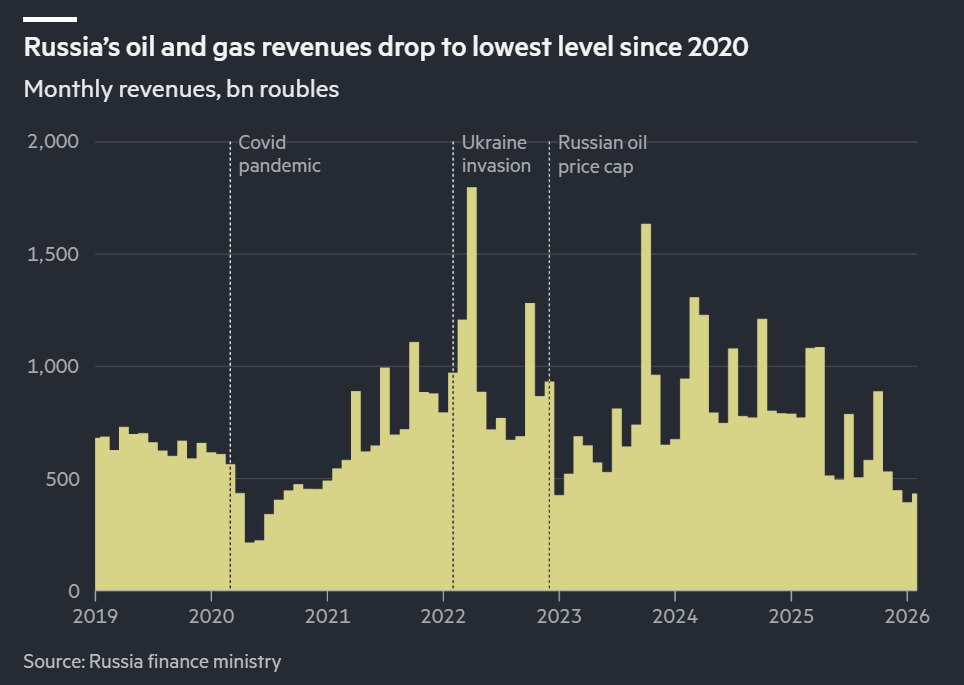
The Iran war reversed even that marginal pressure. In the first half of March, Russia earned approximately EUR 7.7 billion from fossil fuel exports — around EUR 513 million per day, up from EUR 472 million in February. Rising global prices did most of the work. Russia sits outside the Strait of Hormuz. When Gulf supplies are disrupted, Urals crude becomes more attractive by default. Moscow brought in an estimated $150 million per day in extra budget revenues from the price spike alone. The shadow fleet, meanwhile, moved quickly to take advantage of the reopened Indian route — ships that had been heading to eastern ports for Chinese deliveries began rerouting west toward India, taking shorter, more profitable voyages.
The story of two vessels captures the broader pattern cleanly. The Aqua Titan, a Russian-laden tanker originally heading for the Chinese port of Rizhao, U-turned in the South China Sea in mid-March and redirected to New Mangalore, India — the first of at least seven tankers to do so within days of the US waiver. Then there is the Strateg, which had cycled through at least five flag changes and four name changes since 2022, accumulating sanctions from the US, EU, and UK along the way. The FT tracked it making ship-to-ship transfers near the Suez Canal in February before heading to deliver crude to the Vadinar refinery on India's west coast — a facility 49% owned by Rosneft. The shadow fleet does not pause for geopolitics. It reads the market and moves.
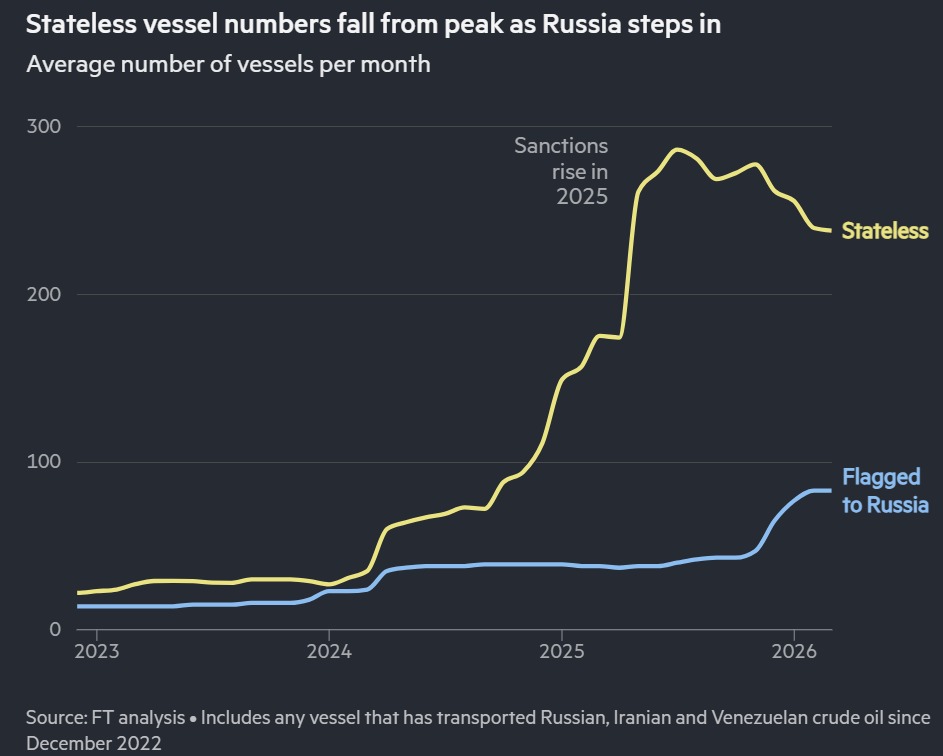
What the Iran war has clarified is that the shadow fleet is no longer a temporary workaround — it is a structural feature of global oil markets. FT analysis identified over 1,000 vessels that have transported Russian, Iranian and Venezuelan crude since late 2022, with 683 operating outside western insurance systems. These ships go dark a quarter of the time, change flags repeatedly, and use ship-to-ship transfers in international waters to obscure the origin of cargo. Before the Iran war, the shadow fleet accounted for nearly a quarter of global crude oil exports. That share has only grown since.
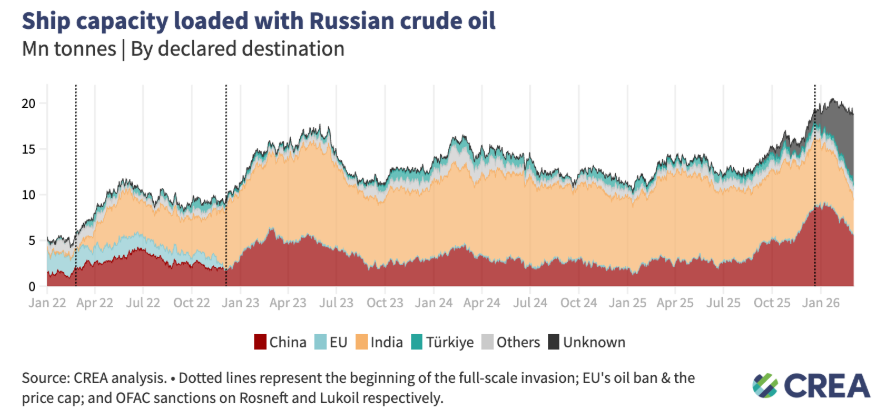
The customer concentration underlying Russian exports remains a structural reality that no waiver changes. China accounts for 52% of Russia's fossil fuel export revenues, with crude oil making up the dominant share. Chinese imports from Russia almost doubled year-on-year in February 2026, even as China's total crude imports grew more modestly. India, despite the pressure campaign, remained Russia's second-largest crude customer throughout this period. The three largest buyers — China, India and Turkey — together absorbed 93% of Russian crude exports over the past year. This is not a diversified customer base, but it is a loyal one, and the economics of discounted Russian crude are durable enough that political pressure alone has consistently failed to displace them.
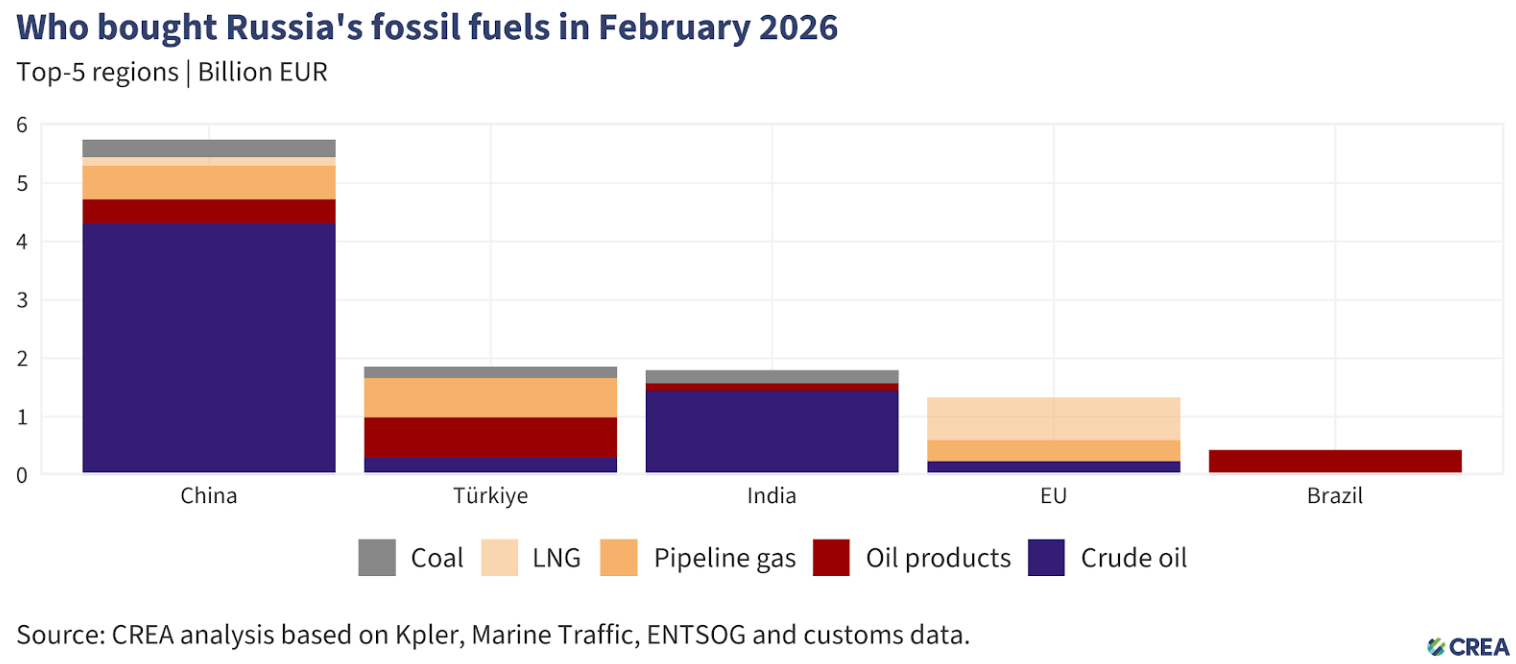
India's own response to the waiver was notably assertive. The government stated that it had "never depended on permission" from any country to buy Russian oil, adding that Russia remained India's largest crude oil supplier even in February 2026. That statement carried weight: it reframed the US waiver not as a concession granted, but as a formal acknowledgement of a trade relationship that had continued through the pressure campaign anyway. The geopolitical theatre of the tariff-for-oil-promise deal was, in retrospect, always more fragile than it appeared.
The transatlantic dimension of all this deserves attention. European nations have continued seizing shadow fleet vessels even as Washington eased restrictions — Belgium, Sweden, and France all intercepted ships in the early weeks of the Iran conflict. EU foreign policy chief Kaja Kallas put it plainly: if the goal is to end the war in Ukraine, Moscow needs less money, not more. But the Kremlin has responded to the seizure campaign by reflagging vessels under the Russian flag, which removes the stateless status that European authorities had been using as legal justification for interceptions. Future seizures risk a different kind of confrontation.
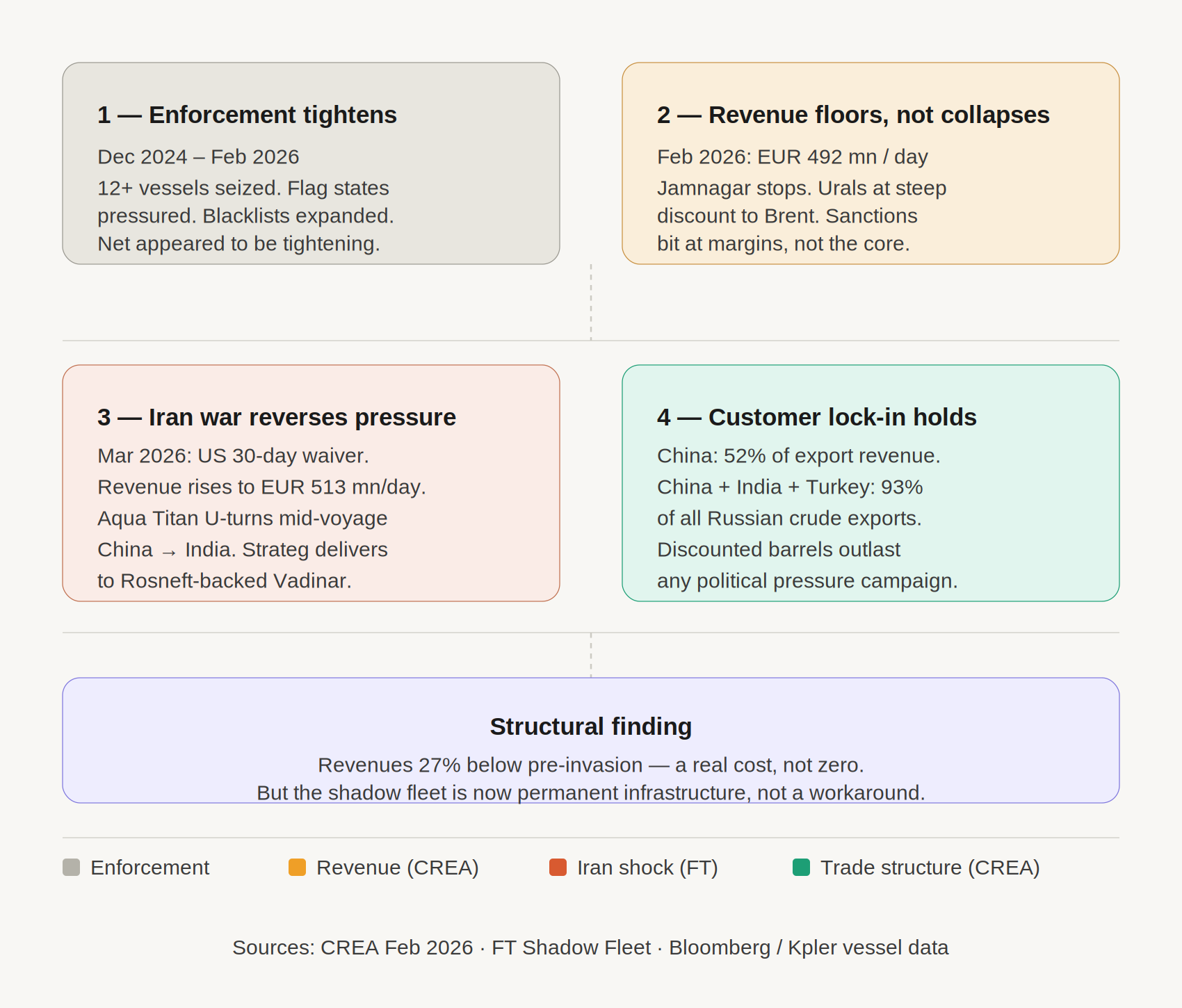
Russia's fossil fuel revenues are 27% below pre-invasion levels in real terms — the sanctions have not been without effect.
But the shadow fleet has proven more resilient than its architects anticipated, and the Iran war has, at least temporarily, handed Moscow a windfall it did not earn through any policy of its own. The spice, as one sanctions compliance expert put it, must flow. And for now, it still does.
Tags: