
People who are waiting for a return to "normal" in the Strait of Hormuz need to recalibrate what normal even means anymore. This is no longer a temporary flashpoint that fades once the missiles stop flying. It has become a permanent, etched feature of the global security paradigm, and I think markets are still underpricing just how sticky that reality is going to be.
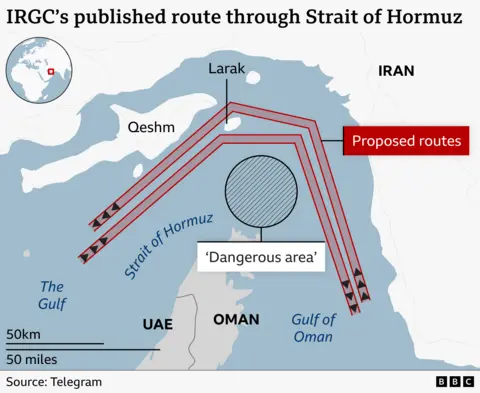
To understand why, it helps to look at the geography itself. Hormuz is barely 33 to 39 kilometres wide at its narrowest, squeezed between Iran and the Musandam peninsula, with a scattering of small islands, Qeshm, Hormuz, Larak, Abu Musa, the Tunbs, that give Tehran a natural perch over the world's most important oil artery. Iran has long called these islands its unsinkable aircraft carriers, and that framing matters. It tells you Tehran doesn't see the strait as a shipping lane it merely sits beside. It sees it as a weapon it holds, one that requires no navy to use, just missiles, drones, fast boats and the psychological weight of insurance premiums.

So where does this go from here? I see three realistic paths. The first is continuity, Iran keeps functional control the way it has now, through the PSGA, the Persian Gulf Strait Authority. This is the path of least resistance and, frankly, the most likely in the near term, because it requires nothing new from Tehran except staying power.
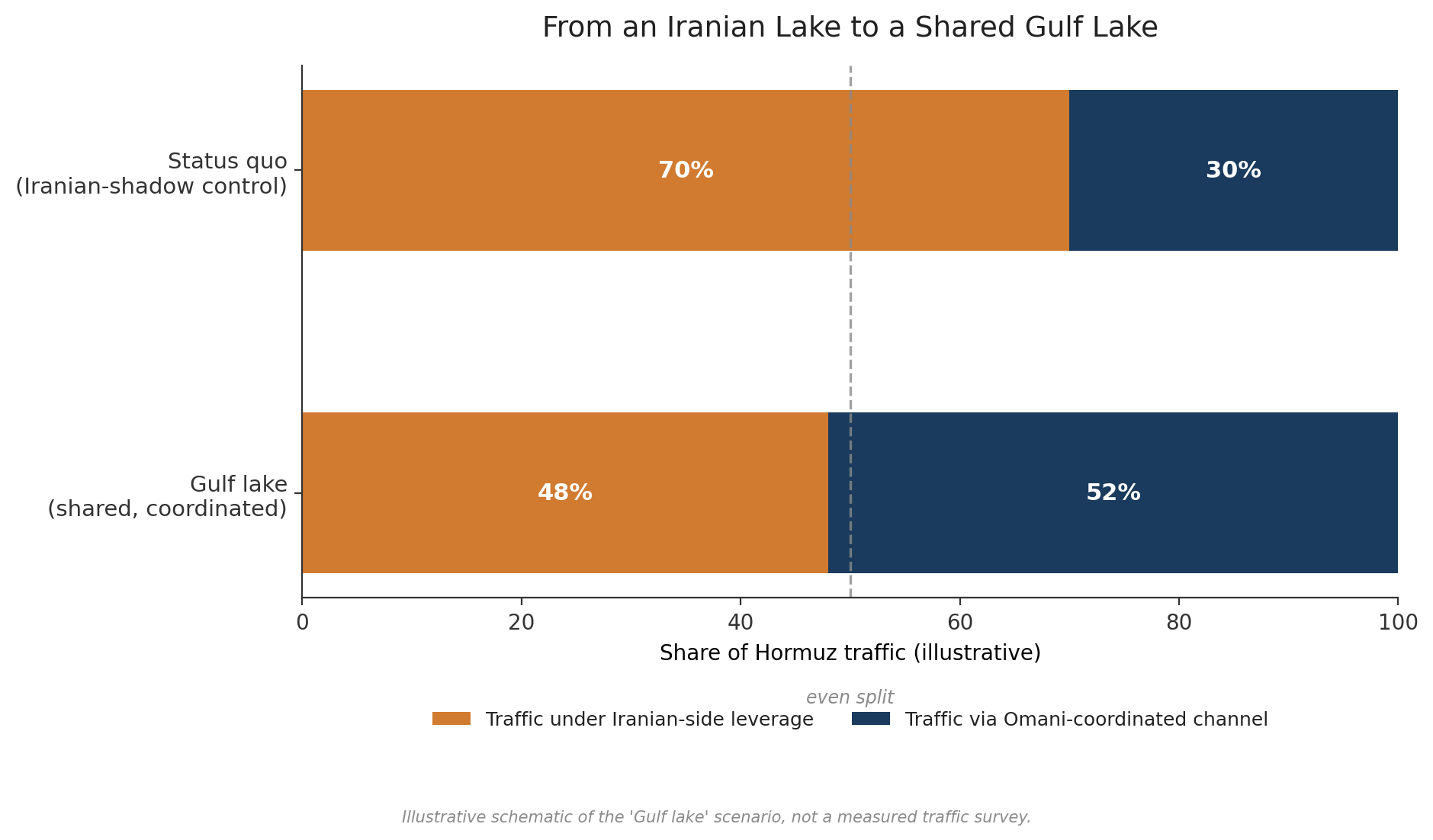
The second scenario is more interesting. Instead of an Iranian lake, the Gulf slowly becomes a shared lake, a genuine Gulf lake, with traffic splitting across the existing Omani and Iranian channels rather than concentrating in Iran's shadow. This is less about anyone defeating anyone and more about diplomacy and traffic management catching up with the reality that no single actor can indefinitely police a waterway this important to the whole world, not just to Washington or Tehran.
The third path is the ugliest, an all out war where whoever wins simply controls the strait outright. I don't think this is the base case, but I no longer think it's a tail risk either. The last several months have shown how quickly rhetoric can convert into action.
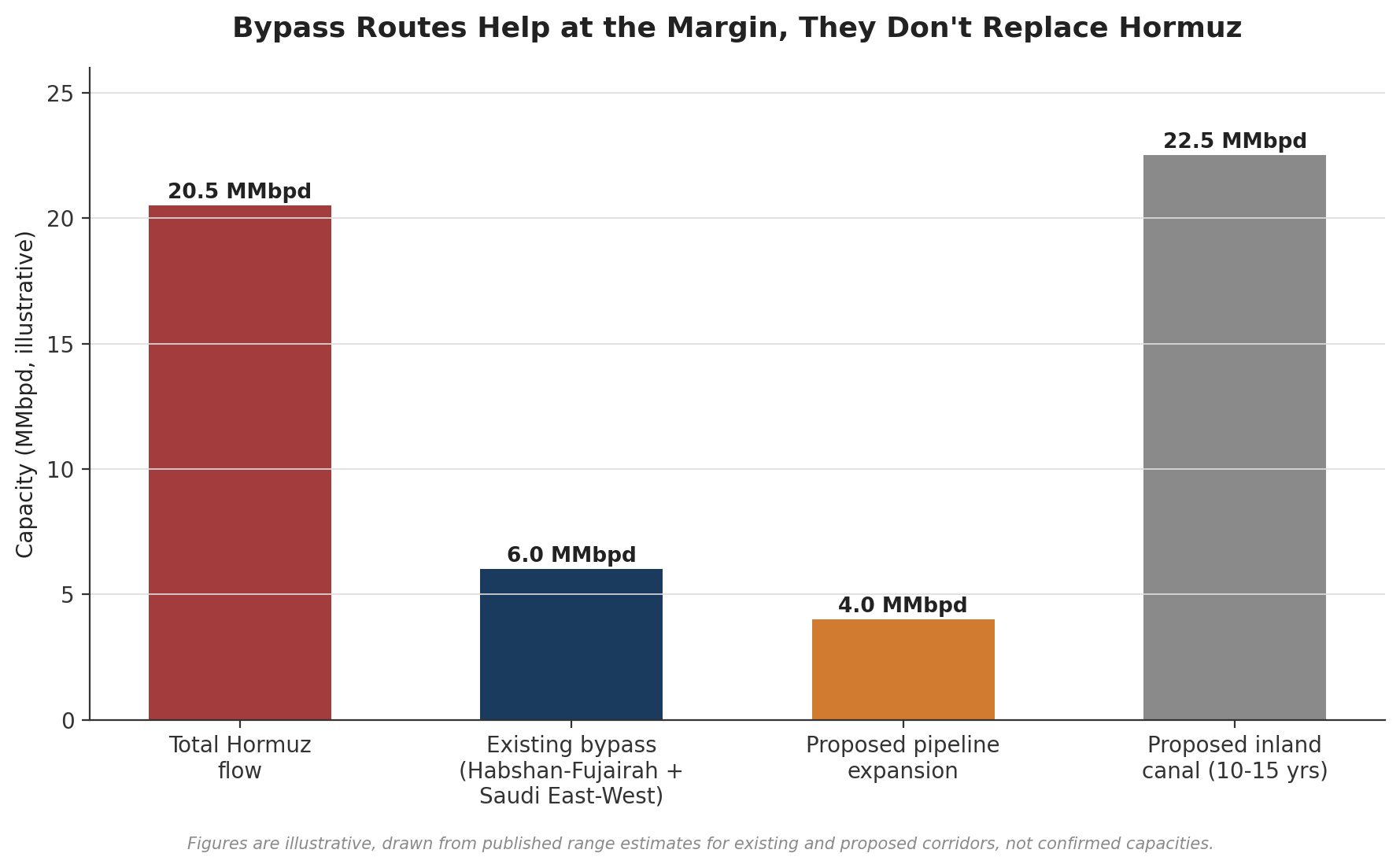
Now, people will point to alternative routes as the fix, and I understand the appeal. There is a genuine case being built around Emirati corridors linking the Gulf coast to the Gulf of Oman, and Turkey has its own ambitions to redraw regional energy routes through Iraq, Qatar and the Caspian. Both are worth watching. But easier on paper than in practice is the honest summary. Pipelines and canals take years, capital in the tens of billions, and political alignment across countries that don't always agree on much. None of these bypasses come close to replacing Hormuz capacity in the timeframe that actually matters to traders.
Which brings me to oil prices. If the strait's leverage is now structurally embedded rather than episodic, then the geopolitical risk premium isn't a spike that fades, it's a floor. I think that floor gets firmer over the medium to long term, not because Iran or anyone wants a shooting war, but because uncertainty itself now has a permanent seat at the pricing table. That should keep prices supported on dips even when fundamentals soften, and it changes how we should think about the ceiling too.
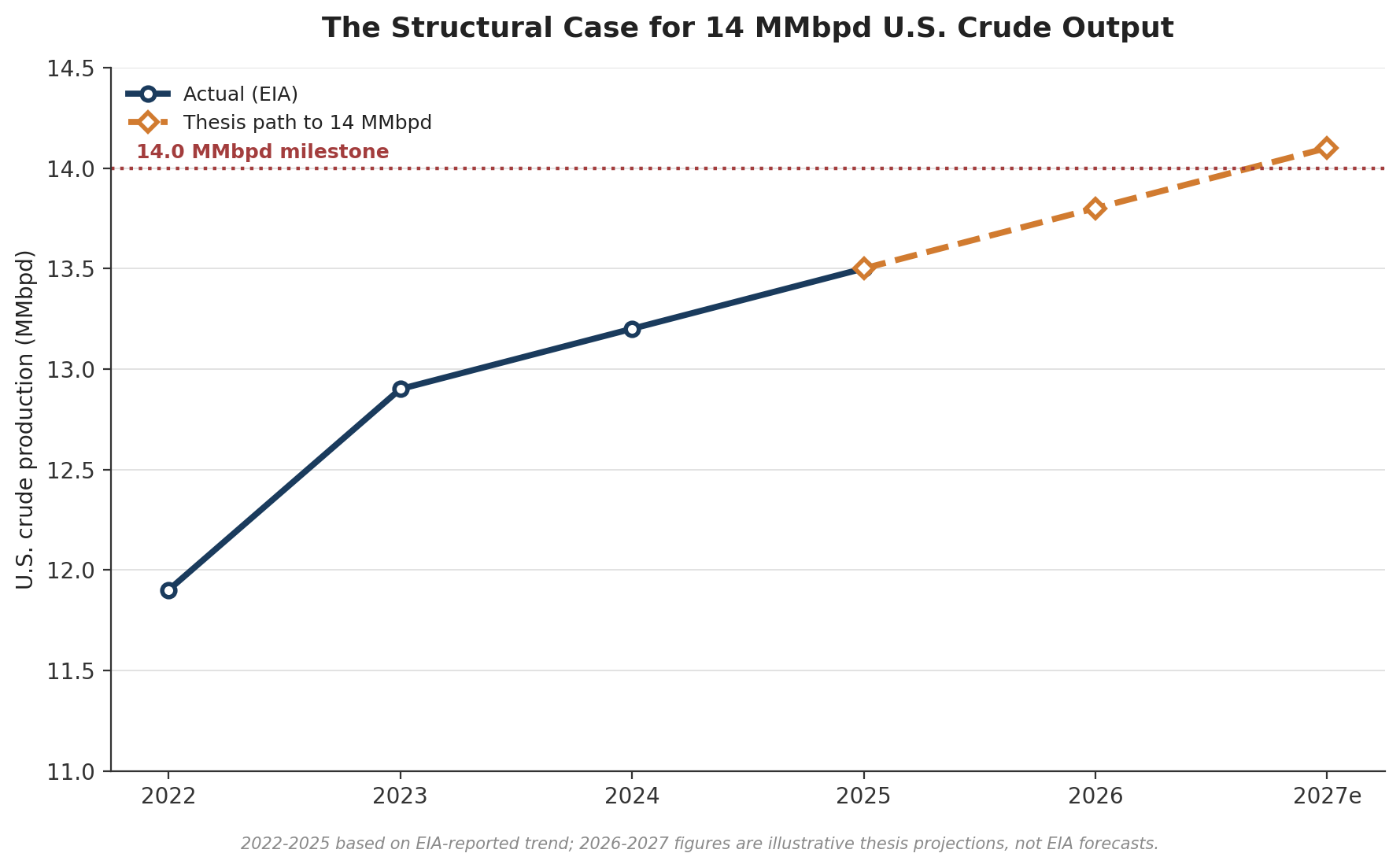
For shale, this actually reinforces a thesis worth taking seriously, that the path to 14 MMbpd isn't purely a supply story, it's supply meeting a world that can no longer assume cheap, uninterrupted Gulf transit. A persistent premium supports the economics of drilling even as completion efficiency keeps improving. There's a lot more to unpack here, the timing of infrastructure releases, winter demand in the Northeast and Europe, and how quickly, or slowly, any of these bypass routes actually get funded. We'll dig into all of that in the upcoming MMV.