
What crack spreads are
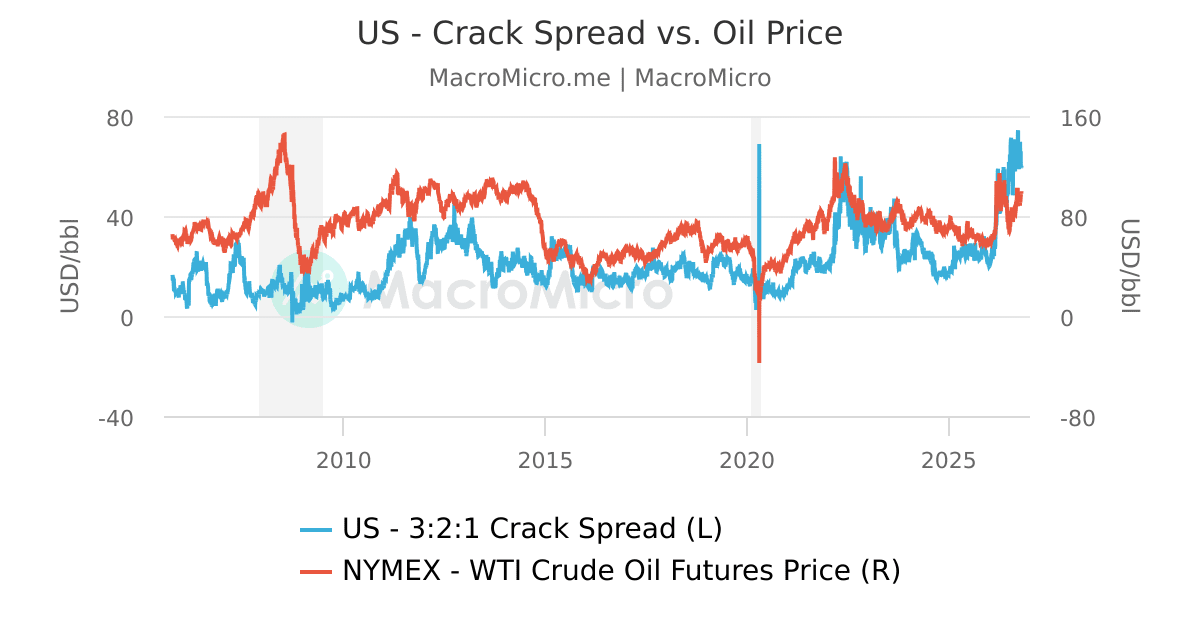
A crack spread is simply what a refiner earns for turning crude into something people actually burn. Refiners do not profit because crude is expensive or cheap, they profit on the gap between what they pay for crude and what they can sell gasoline, diesel and jet fuel for. The standard yardstick is the 3-2-1 spread, built on the rough assumption that three barrels of crude become two barrels of gasoline and one barrel of diesel, mirroring a typical U.S. refinery slate.
Why they matter
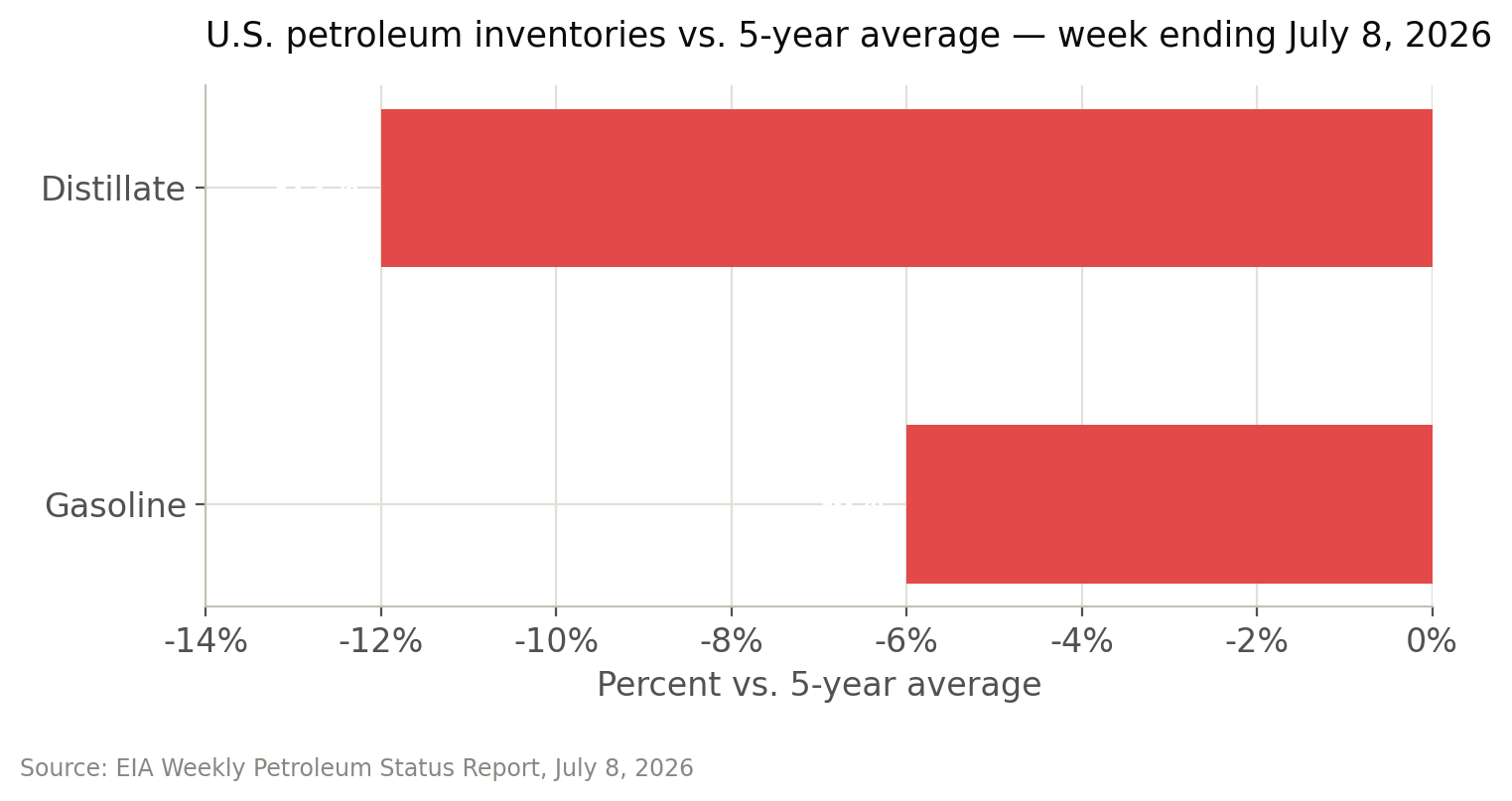
The disconnect between crude and products shows up clearly in last week's inventory data. The EIA's weekly petroleum status report for the week ending July 8 put U.S. distillate stocks about 12 percent below their five year average and gasoline about 6 percent below average, with distillate stocks falling by roughly 5.9 million barrels more than the market had expected. Refiners were not sitting idle either, utilization ran at 95.8 percent and crude inputs averaged 17.0 million barrels a day, producing about 9.74 million barrels a day of gasoline and 5.19 million barrels a day of distillate. The barrels are being run hard, refineries are not sitting on spare capacity, and there simply are not enough finished products piling up behind them to relieve the pressure on gasoline and diesel prices.
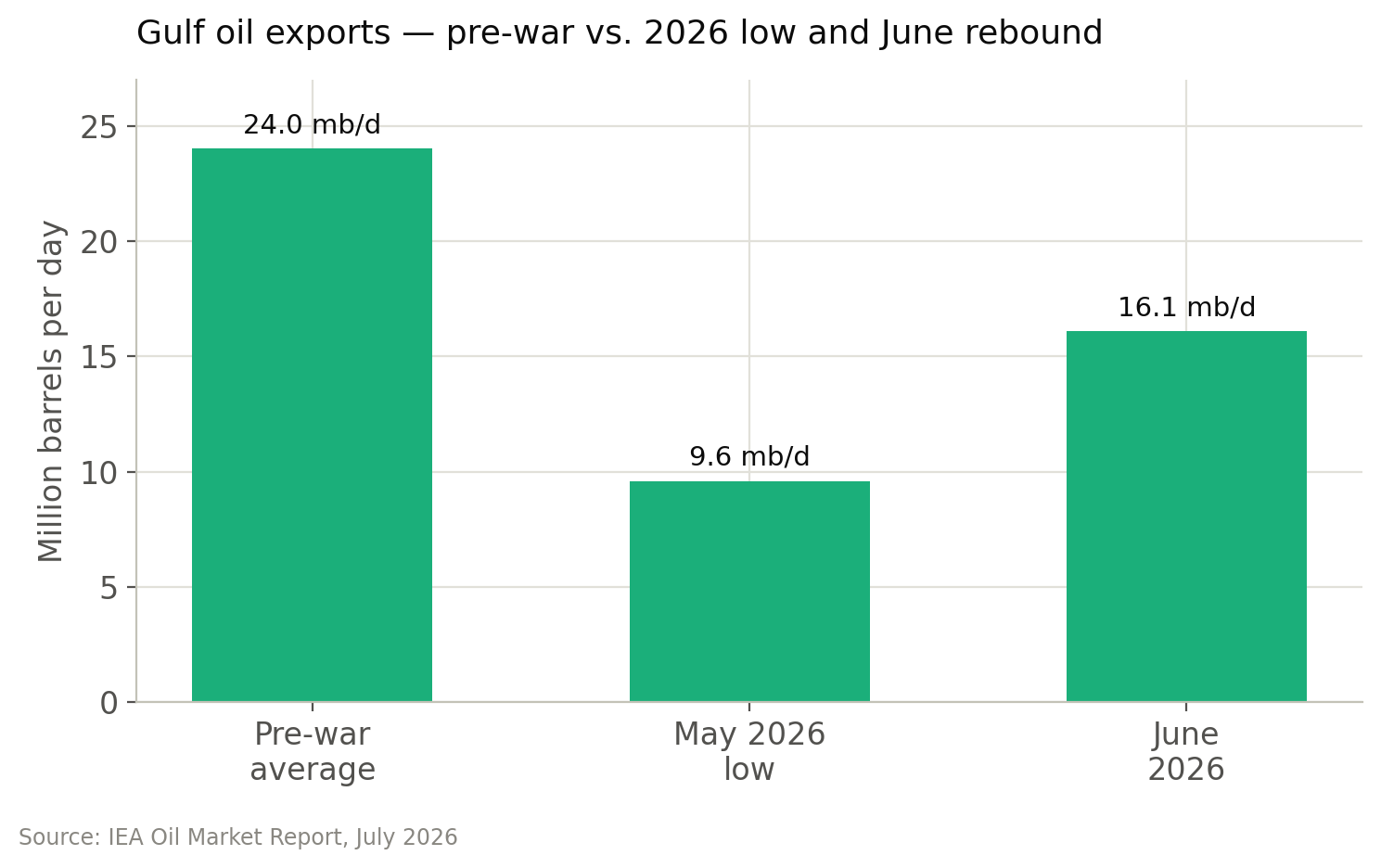
Part of the reason is that crude supply came back faster than refined product supply did. The IEA's July Oil Market Report shows global crude output rebounding by 4.1 million barrels a day in June to 98.8 million, as flows resumed through the Strait of Hormuz, though that is still 9.4 million barrels a day below pre war levels. Gulf exports jumped 6.5 million barrels a day in June to 16.1 million, again still well short of the roughly 24 million barrels a day the region shipped before the conflict. Refinery runs rose only 1.5 million barrels a day over the same period and remain 6 million barrels a day below year ago levels, since Middle East export refineries have yet to fully restart and Russian throughput keeps getting hit by drone strikes on its refining network. Crude is recovering faster than the capacity to turn it into fuel, and that gap between the two recoveries is exactly what a crack spread is designed to expose.
Why everyone is talking about them now
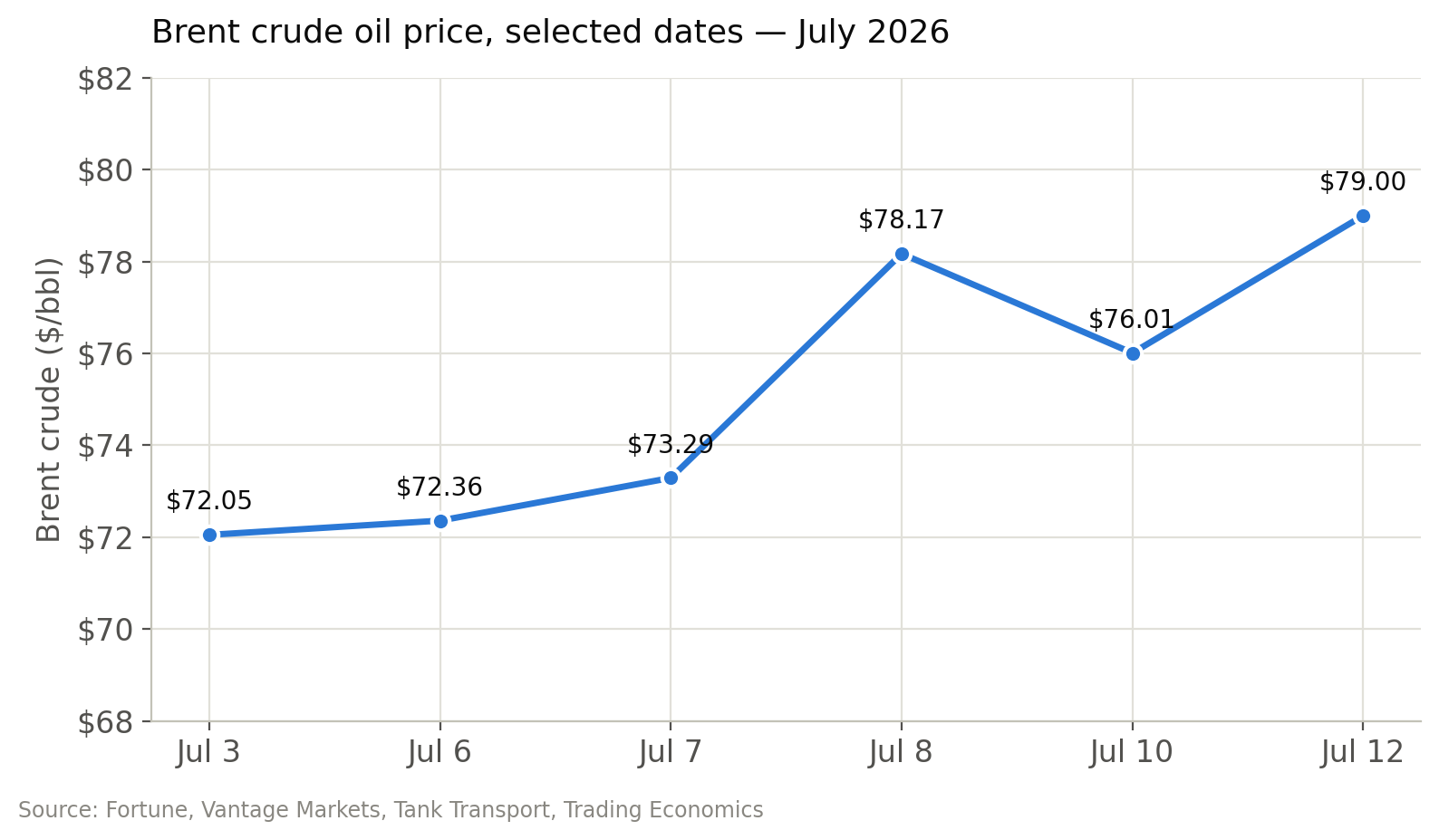
That gap has blown wide open this month. The prompt NYMEX 3-2-1 crack hit a record 64.58 dollars a barrel on July 8, according to LSEG. In Europe, diesel margins pushed above 60 dollars a barrel the same week, and European gasoline traded at a 41 dollar premium to crude, the widest since 2022. In the U.S., the diesel crack alone moved above 80 dollars a barrel as ultra low sulfur diesel futures spiked. None of that is explained by the price of crude itself. Brent settled near 76 dollars on July 10, then jumped back toward 79 dollars on July 12 after the United States and Iran traded fresh strikes, the fourth exchange in a week. A 76 to 79 dollar crude tape cannot account for an 80 dollar diesel crack on its own.
Exxon Mobil put a number on what that is worth. In a July 7 regulatory filing, the company signaled second quarter earnings could rise by about 5 billion dollars versus the first quarter, with roughly 2.6 billion of that tied to refining timing effects and another 2 to 2.4 billion from stronger energy product margins, partly offset by about 1 to 1.2 billion in losses from Middle East production disruptions. That single filing is the clearest dollar figure yet attached to how much value has migrated from the wellhead to the refinery gate this quarter, and it will not be the last earnings report to show it.
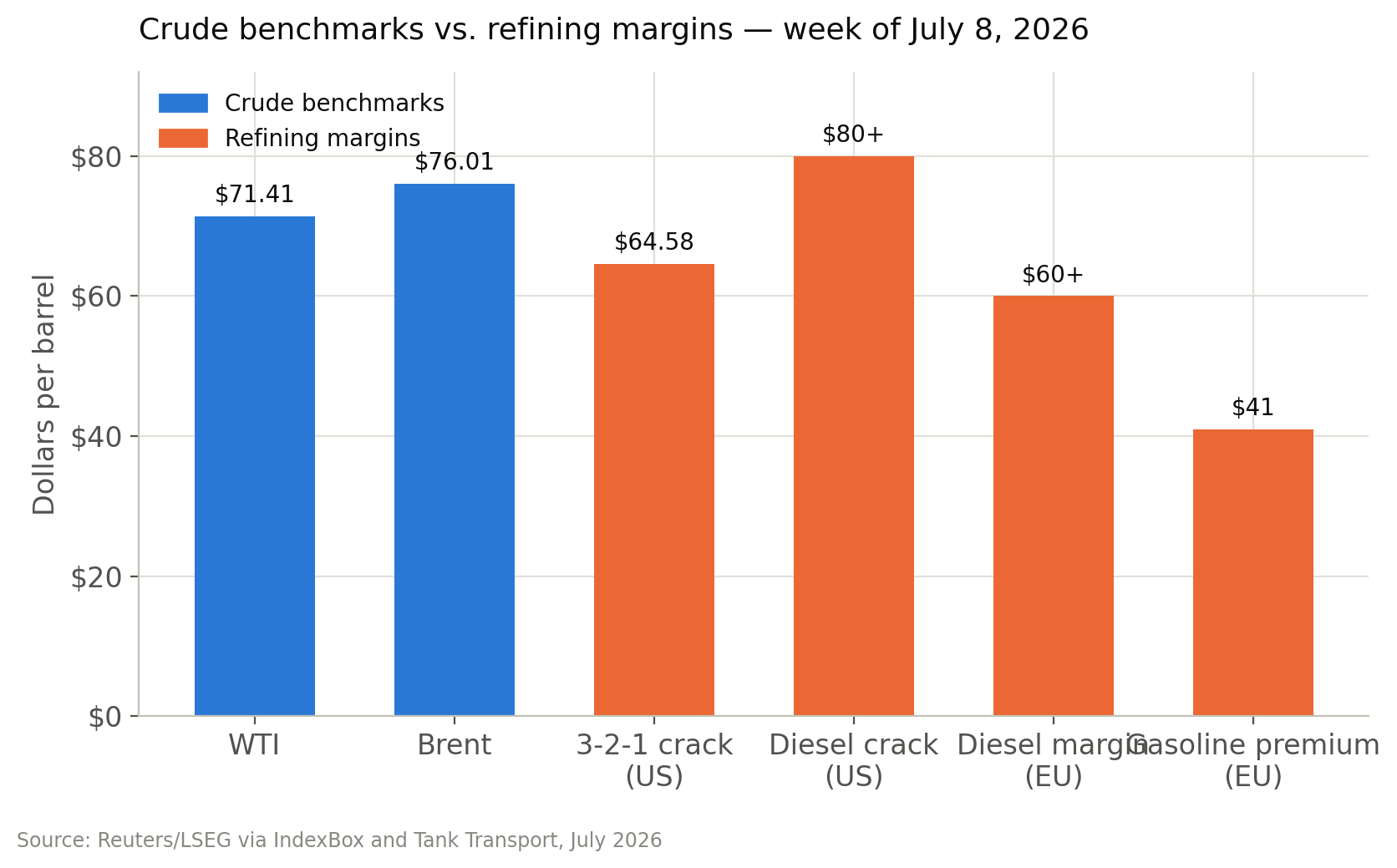
None of this argues that the crude story is over. Iranian sanctions relief is set to expire August 21, and analysts tracking the strait note that tanker traffic, while recovering, still runs below prior year norms on a seven day average, meaning the crude side could tighten again if the ceasefire frays. But for now the more urgent scarcity sits downstream. Diesel supply has been squeezed further by Russia's temporary export halt and continuing refinery outages across the Middle East and Russia, while U.S. distillate stocks sit at levels that leave little room for a summer driving season surprise or an early start to hurricane related outages on the Gulf Coast. A falling Brent print does not necessarily mean falling costs at the pump or in a trucking fleet's fuel budget, and right now that gap is the story crack spreads were built to capture.