
When U.S. forces captured Venezuelan leader Nicolás Maduro in a January 3, 2026 raid, President Donald Trump immediately framed Venezuela’s oil as the economic centerpiece of Washington’s post-Maduro strategy—calling on U.S. producers to spend at least $100 billion to rebuild a sector hollowed out by years of mismanagement, sanctions constraints, and severe underinvestment.
But the early post-raid reality is that the companies with the balance sheets and technical depth to revive Venezuela’s “oil machine” are also the most cautious about touching it—at least until the legal, fiscal, and security framework changes in ways they can trust.
The investment landscape right now: more talks than cheques
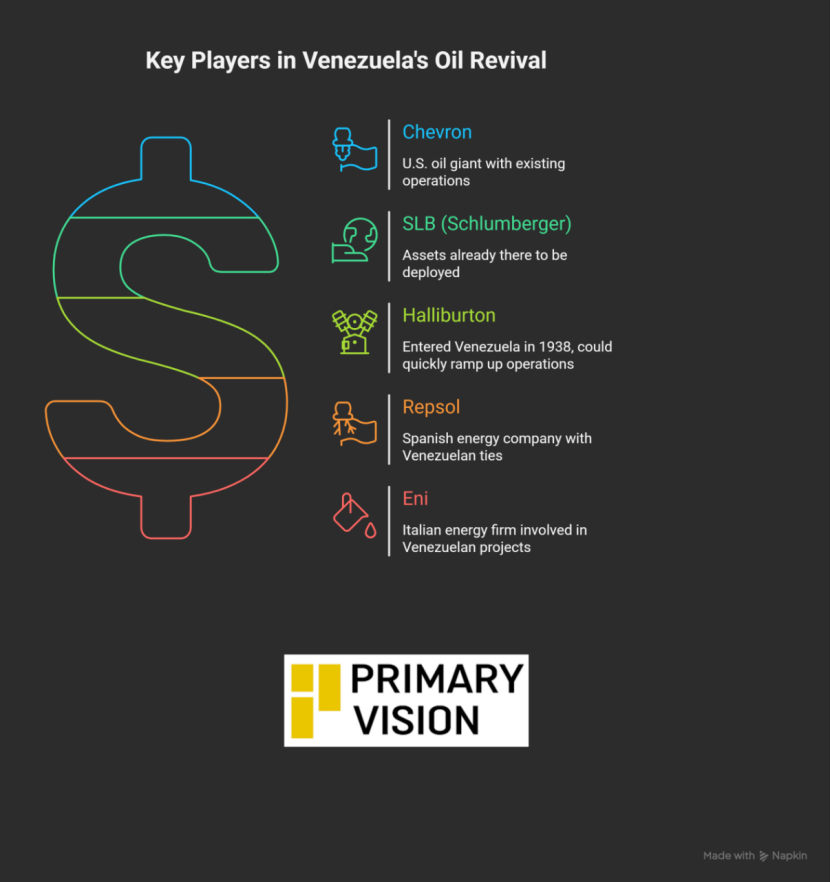
The clearest near-term “doer” is Chevron - the only U.S. major that kept a significant operating footprint in Venezuela through the upheaval years and sanctions era. U.S. officials have been moving quickly to expand Chevron’s Venezuela license, potentially allowing Chevron to pay the Venezuelan government in cash rather than with crude and to increase exports that are currently constrained by the structure of sanctions permissions. Chevron currently produces roughly 140,000 barrels per day in Venezuela through five joint ventures with PDVSA, spanning onshore and offshore projects, including heavy and extra-heavy crude developments in the Orinoco Belt and Lake Maracaibo, and holds roughly 77,000 gross acres in the country.

Source: Chevron, Highlights of Activity, Venezuela
That matters because the country’s practical bottleneck isn’t just geology but the ability to fund, procure, and execute repairs across a battered system. Chevron executives have told the White House they have a path to lift output quickly from existing joint ventures, with claims of near-immediate increases in “liftings” and additional growth plans tied to disciplined spending. Chevron vice chairman Mark Nelson has said output from existing projects could rise by roughly 50% within 18 to 24 months by focusing on the most productive wells and deferring large-scale greenfield development.

Other U.S. majors are notably more restrained. ExxonMobil and ConocoPhillips are signaling restraint. have both signaled that Venezuela remains high-risk under current conditions. At a White House meeting, Exxon CEO Darren Woods described the country as “uninvestable” under existing legal and commercial frameworks, citing the company’s history of asset seizures there. Exxon has said it is willing to send a technical team to assess conditions, but that step is still about evaluation rather than capital deployment. ConocoPhillips CEO Ryan Lance has emphasized that Venezuela’s energy system needs deep restructuring, including reform of PDVSA, and argued that banks would need to help restructure sovereign and corporate debt before meaningful infrastructure financing could occur.
Meanwhile, the Trump administration has also signaled it may lean on smaller independents rather than majors to move faster—Treasury Secretary Scott Bessent said “independent oil companies and individuals” have been calling, while “big oil companies…are not interested.”
Non-U.S. incumbents already operating in Venezuela add another layer to the picture. Companies such as Repsol and Eni were represented in White House discussions, and Repsol has said it sees a path to tripling production in Venezuela over the next several years under the right regulatory and commercial conditions. These firms already have assets on the ground and may be better positioned to scale incrementally if constraints ease.
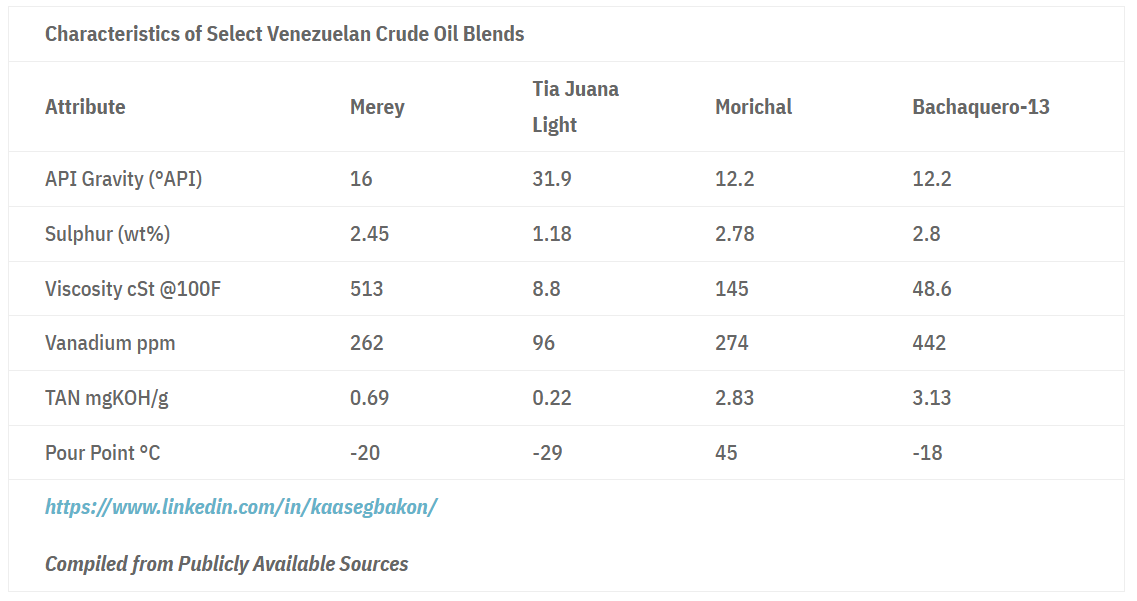
Any discussion of revival also has to start with what “fixing” the oil sector actually entails. Much of Venezuela’s resource base is extra-heavy oil (notably in the Orinoco Belt). Producing, transporting, blending, and refining these barrels requires specialized upgrading, steady diluent supply, and reliable midstream infrastructure—raising costs and complexity versus lighter shale crudes. Aging pipelines and degraded facilities also serve as a hindrance. The U.S. EIA notes Venezuela relies on an aging pipeline network, with many pipelines estimated to be more than 50 years old, creating reliability and spill-risk issues that compound outages and restrict flows from field to terminal. Refining has been repeatedly disrupted by equipment failures and shortages of parts. For example, industry reporting in 2025 described PDVSA efforts to restart key units at the El Palito refinery amid chronic constraints on importing components and maintaining equipment.

Source: Pipeline Online
Oilfield service companies emerge here as critical enablers rather than passive beneficiaries. SLB never fully exited Venezuela and remains the only major international oilfield services company actively operating in the country, with drilling, production, and well-intervention assets already in place and revenue-generating contracts tied to existing operators. Halliburton exited in 2020 but retained operating bases, facilities, and some equipment in Venezuela, and has since confirmed it could redeploy stacked North American drilling and completion fleets rapidly, positioning it as a key player in cementing, completions, diagnostics, and well rehabilitation once commercial and payment terms are resolved.
So who fixes it?
José Chalhoub analyst of political risks and oil at Jose Parejo and Associates says the single most important step to make Venezuela investable would be cleaning up corruption at the state oil company and reforming the Hydrocarbons Law to attract foreign capital, while noting that companies remain wary because of insecurity in remote production areas and the overlapping geopolitical interests of Russia, China, Iran, and the United States. When asked which part of the system would fail first if production rose quickly, he argues that refining would be the biggest bottleneck, citing years of neglect, poor maintenance, major accidents, and explosions at key refineries, as well as the impact of 2019 U.S. sanctions that restricted diluent imports and reduced gasoline output. On who stands to benefit first, José says U.S. oil companies—particularly Chevron—are best positioned due to their decades-long familiarity with Venezuela’s oil sector, the country’s proximity to the U.S., and the compatibility of Venezuelan crude with U.S. Gulf Coast refineries, while Russia and China would likely lose influence if the U.S. re-emerges as the dominant player.
Rachel Ziemba, a specialist in geopolitical and macro risk analysis, takes a more structural view, saying Venezuela would only become investable with changes to the royalty framework that are sustainable and unlikely to be reversed by a future government, combined with broad sanctions relief. Asked about potential system failures under a rapid production ramp-up, she cautions that it is difficult to generalize, as risks would vary significantly by project and operational conditions, and says operators closer to the ground would be better placed to judge. On early winners, Ziemba points to oil marketing intermediaries and oil services firms—especially those already present in the country—as the players most likely to benefit first from any recovery.
What is not yet happening is just as telling: the largest U.S. majors have not committed to the kind of multi-decade, infrastructure-heavy investment program that Venezuela’s extra-heavy oil system requires. Until investors see durable legal protections, credible fiscal terms, and reliable security, the task of salvaging Venezuela’s oil machine will remain a patchwork of cautious steps rather than the sweeping rebuild envisioned in Washington.