







Articles
Why America Buried a Billion Barrels?
By Osama on September 15, 2026 in Free Articles
286.6 million barrels. That's where the U.S. Strategic Petroleum Reserve sits as of the week ending August 28, 2026, the lowest it's been since November 1982, and close enough to the 300-million mark that engineers are warning the caverns holding the oil could start taking physical damage. A GAO review from May found more than a quarter of what's left isn't even usable for drawdown, tied up by construction and cavern outages. None of that makes sense unless you know what the reserve actually is, physically, and where it came from.
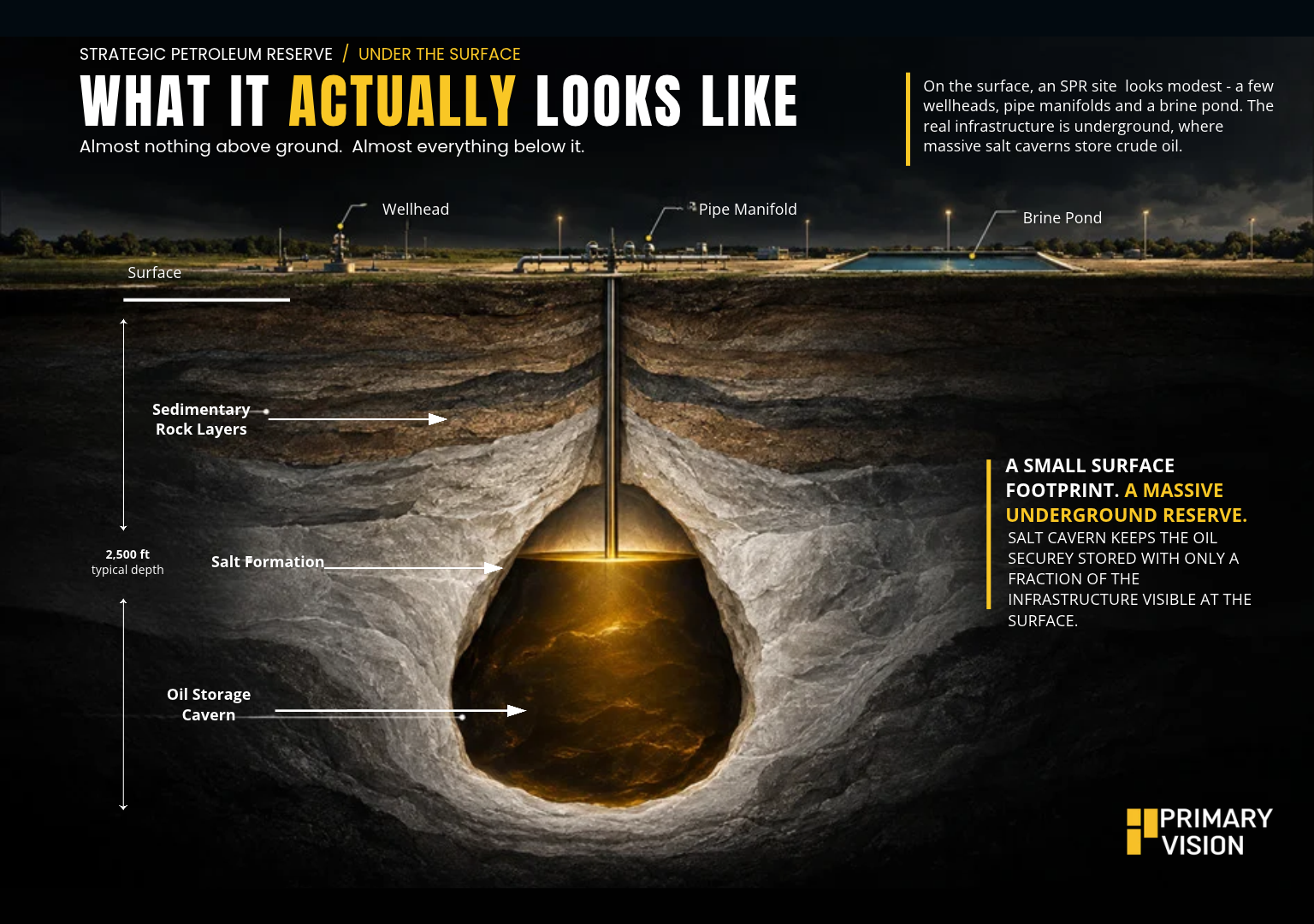
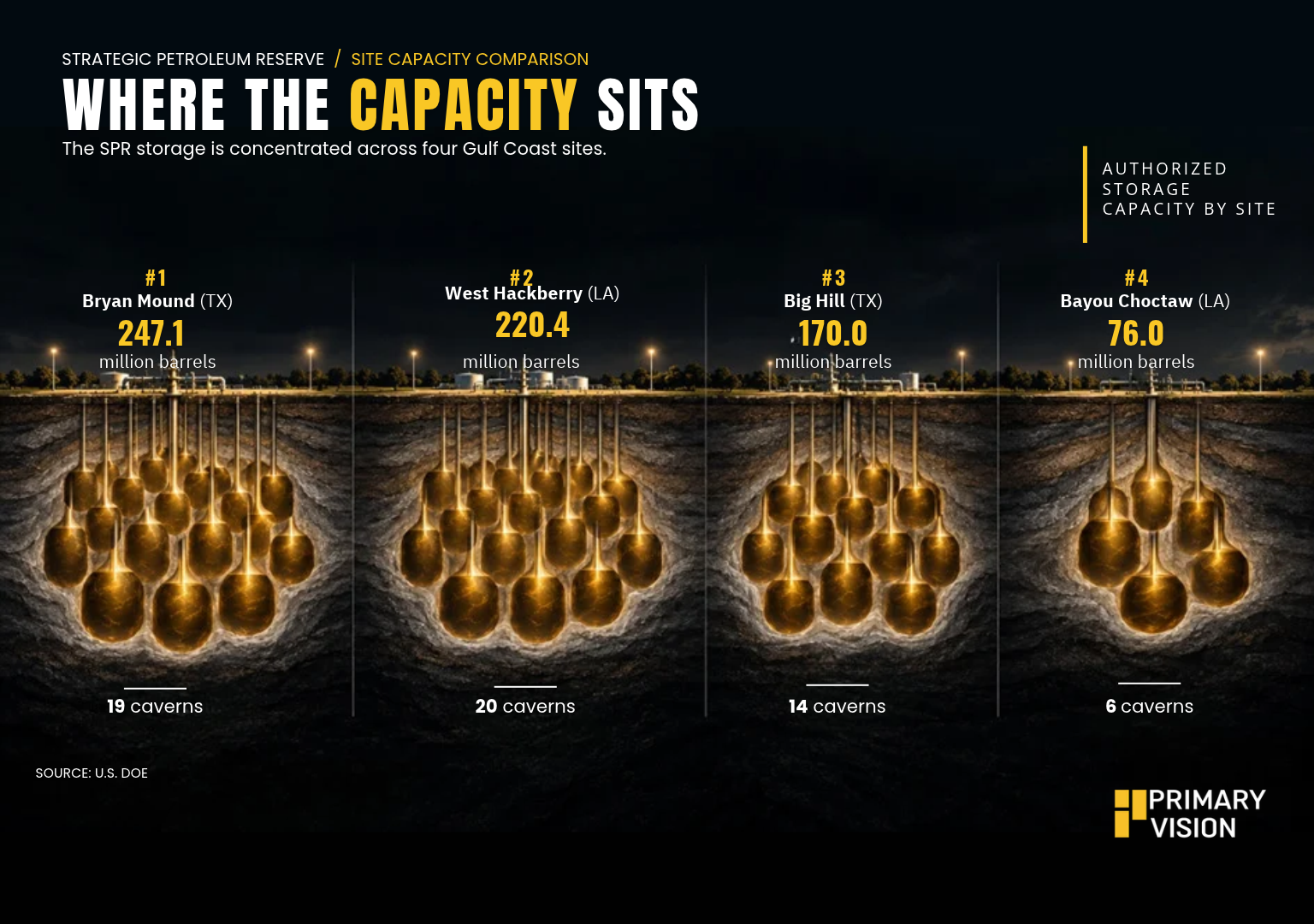
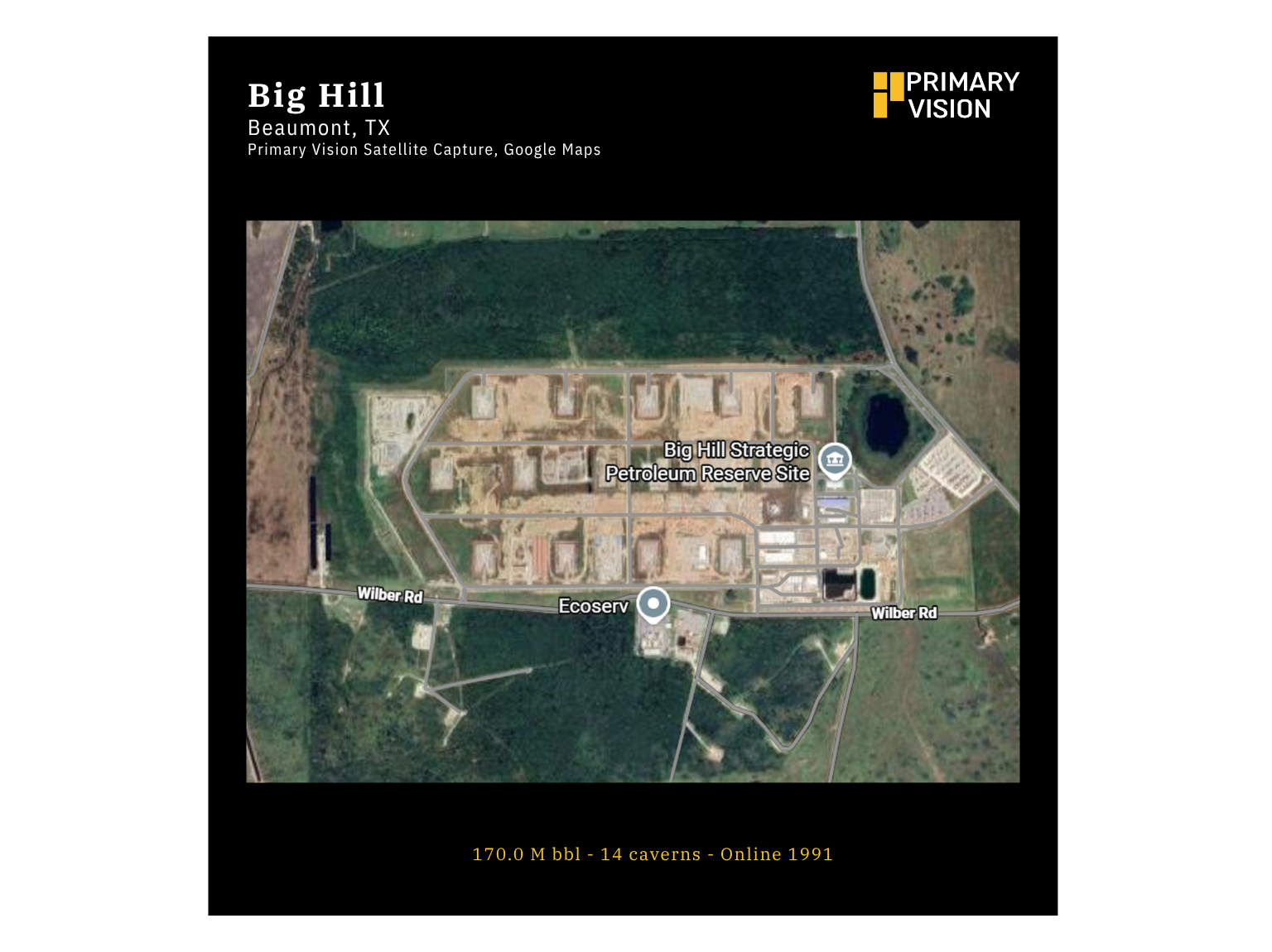
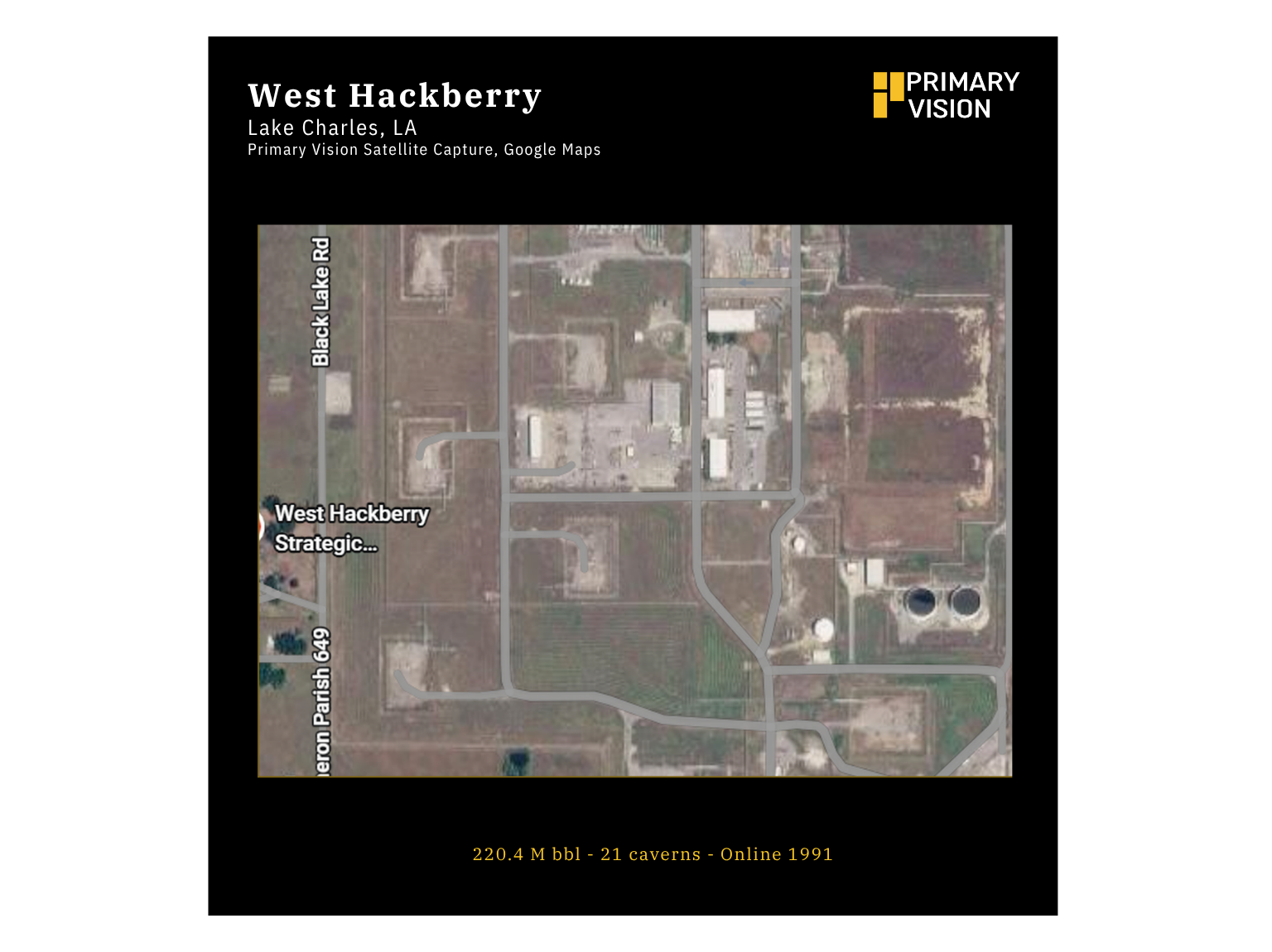
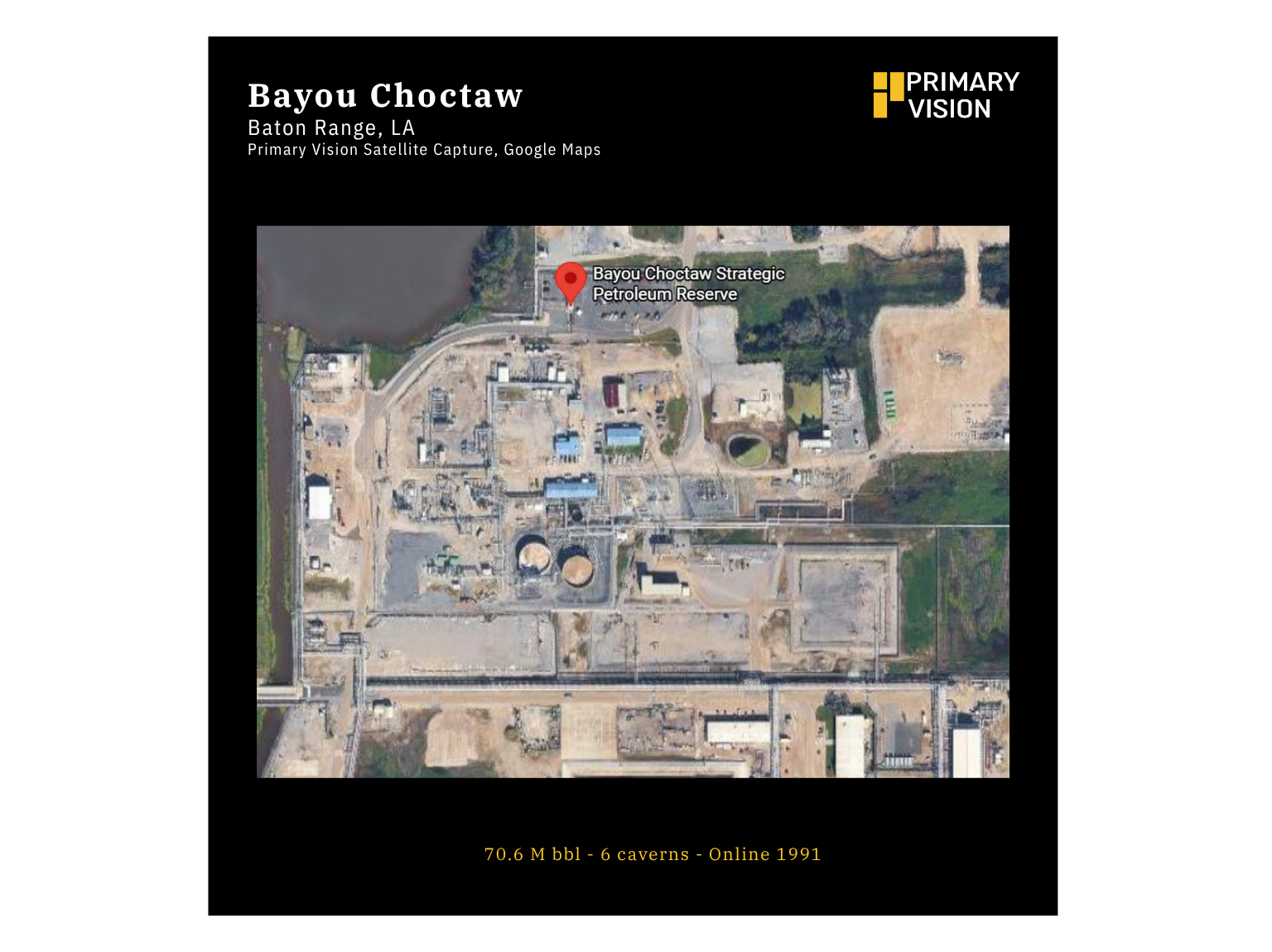
Start with what's actually there, because almost nothing about the SPR looks like what people picture when they hear “oil reserve.” No tank farm, no visible sea of oil. What you'd see at any of its four Gulf Coast sites is wellheads, pipe manifolds, and brine ponds. The oil sits invisible, in 60 underground salt caverns big enough, individually, to swallow a skyscraper. Almost the entire barrel count the country reports every week is down there, out of sight.
Start in the winter of 1973 for why any of this exists. Arab members of OPEC cut off oil shipments to the United States over its support for Israel in the Yom Kippur War, and the effects showed up at gas stations within weeks: mile-long lines, prices that quadrupled, rationing by license plate number in some states. At the time, the U.S. imported about 35 percent of the crude it consumed. It was the first time most Americans understood that a decision made on the other side of the world could decide whether they got to work that Tuesday.
Congress spent two years arguing about what to do, and landed on the Energy Policy and Conservation Act, which Gerald Ford signed on December 22, 1975. Buried inside a bill mostly remembered for setting fuel economy standards was the authorization for a federal oil stockpile of up to one billion barrels, the idea being that enough crude in reserve could keep the next embargo from holding the economy hostage the way 1973 did. That billion-barrel figure was never a promise, it was a ceiling, and the gap between what Congress imagined in 1975 and what actually got built is really the whole story.
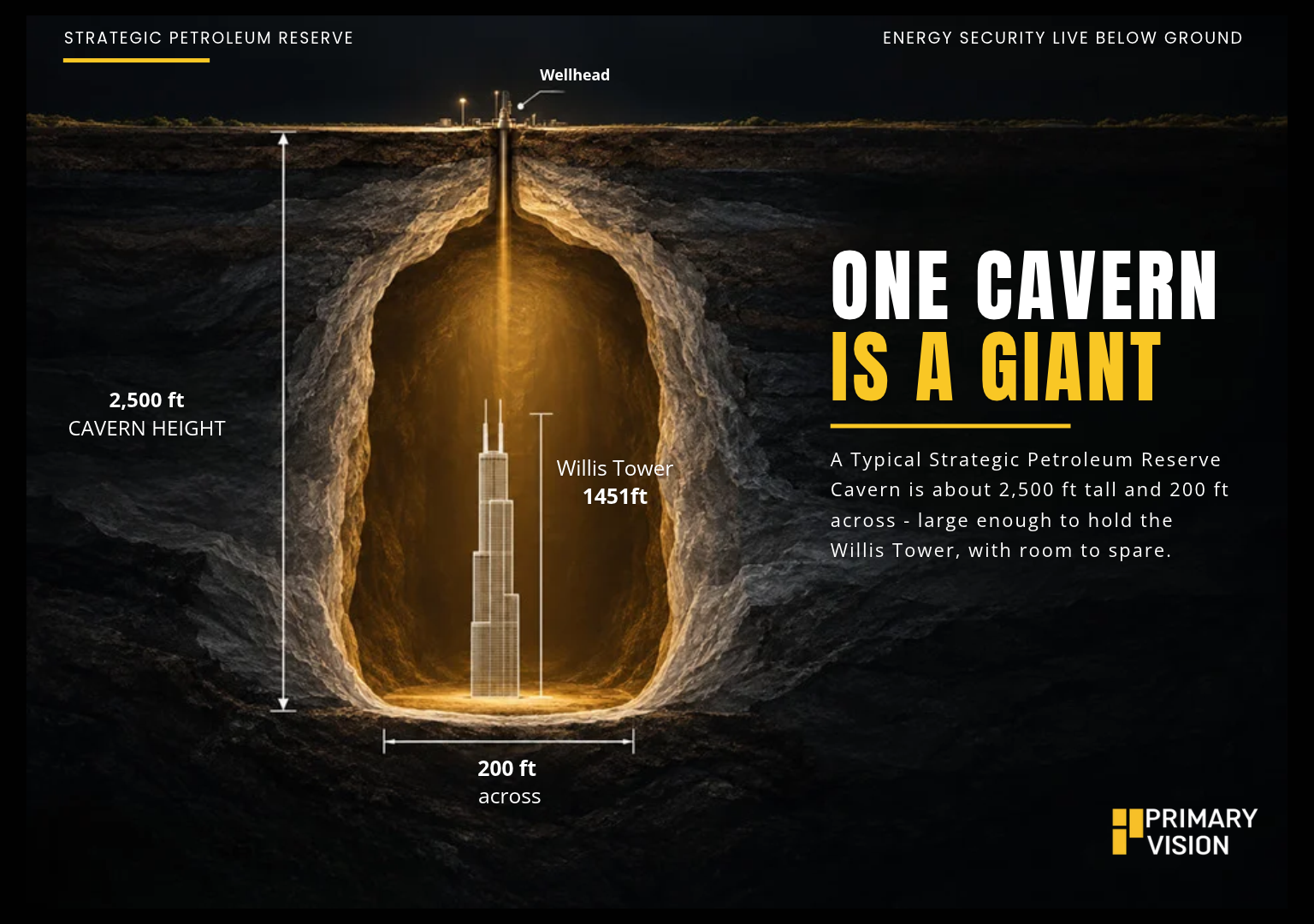
Planners picked the Gulf Coast because the region sits on hundreds of salt domes, and hollowing caverns out of solid salt is roughly ten times cheaper than above-ground tanks, right next to the refineries and pipelines that would need the oil in a crisis. The caverns aren't drilled, they're dissolved: fresh water pumped down a well eats away the salt, and the brine comes back up to be piped offshore or reinjected. Construction started in June 1977, and the first oil arrived that July. The four sites came online in phases through 1991, adding up to 714 million barrels, a little more than two-thirds of what the 1975 law once imagined.
The reserve didn't stop changing once the four sites were built. In 2005, with the billion-barrel ceiling still on the books, Congress directed DOE to actually expand toward it, evaluating a fifth site in Richton, Mississippi, plus expansions at Big Hill and Bayou Choctaw. None of it was built. The reserve topped out at 714 million barrels and has stayed there since, even though the law authorizing a billion never changed.
What has changed, continuously, is the condition of the caverns themselves. Every fill-and-drawdown cycle dissolves a little more salt and reshapes the cavern in ways that can't be undone. DOE is partway through a renovation called Life Extension Phase 2, approved in 2016 at an expected cost of $750 million to $1.4 billion and a target completion of 2024. It's running years behind: West Hackberry's portion was descoped for lack of funding, and as of GAO's May 2026 review, DOE still hadn't signed off on completed work at Bayou Choctaw and Bryan Mound over unresolved quality problems with the prior contractor. A reduced version now targets three of four sites by early 2028
One more thing shifted quietly over the same half century: what kind of oil the reserve is built to hold. Since the 1970s, the SPR has kept a fixed mix of roughly 60 percent sour crude and 40 percent sweet, set to match the heavy foreign oil Gulf Coast refiners were importing at the time. That mix hasn't been revisited since, even as the shale boom spent fifteen years flooding the country with the opposite kind of barrel, light and sweet. Whether those grades still match what the country would use to refill it is a question this series comes back to directly.
There's a second, physical version of this same strain that has nothing to do with legislation or budgets. Siddharth Misra, a petroleum engineering professor at Texas A&M, has pointed out that these caverns were designed for a 25-year lifespan and about five drawdown-and-refill cycles. What actually happened was dozens of releases, stretched across five decades instead of one. DOE officials have told federal auditors they're holding the infrastructure together “with Band-Aids,” and Energy Secretary Chris Wright testified last year that the 2022 sale alone left more than $100 million in repairs still being worked through. The reserve was never designed to be run this hard, this often, and that's before you even get to pulling a barrel out of a cavern half a mile underground, which is where this series goes next.
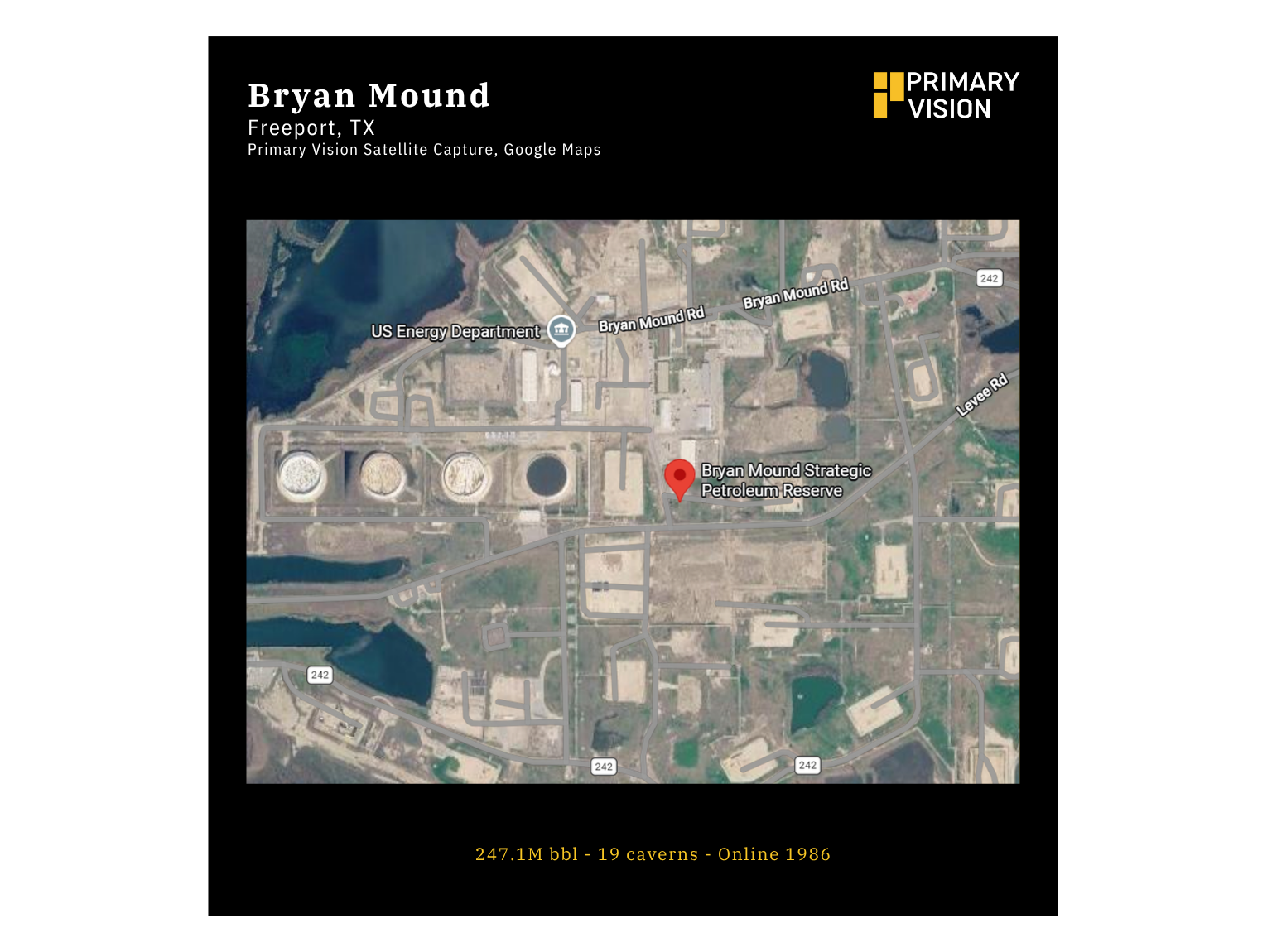
Site Profiles, Primary Vision satellite capture (Google Maps):
Tags: