






Articles
- BLOG / Articles / View
- Articles
Market Sentiment Tracker: What happens if the Fed cut rates?
By Osama on September 16, 2025 in Market Sentiment
Markets are salivating at the prospect of Fed rate cuts after the ugly August payrolls number, but this isn’t a classic “jobs down, stimulus up” moment. The unemployment rate might not be flashing red, yet the revisions to past data — more than 900,000 fewer jobs than previously thought between March 2024 and March 2025 — reveal an economy that’s been weaker under the surface for months. That’s why the Bureau of Labor Statistics, normally a byword for neutrality, is suddenly in the political crosshairs. When the White House is firing BLS commissioners and Wall Street is leaning more on private payroll trackers like ADP, or alternative datasets scraped from job postings and credit card transactions, it’s fair to ask: are policymakers themselves flying with a cracked compass?

Rate cuts should, in theory, cushion the landing. Lower borrowing costs relieve debt service pressure, and in a heavily leveraged economy that matters. Public debt service alone is expected to cross $1.2 trillion this fiscal year, more than the Pentagon’s annual budget. On the private side, U.S. households now carry a record $17.7 trillion in debt, with credit card balances topping $1.3 trillion and delinquencies climbing to their highest level since 2012. Cheaper credit could soften the squeeze, but monetary easing doesn’t touch the structural issues dragging on growth.

Trump’s immigration squeeze is shrinking the labor pool, something Oxford Economics estimates is knocking about half a percentage point off GDP. Tariffs, which the administration continues to expand, are eating into consumer spending and business margins. Pantheon Macroeconomics thinks tariff effects will peak in Q4, with as much as a 0.7 percentage point drag on quarterly GDP. Even if the Fed slashes rates, those frictions won’t disappear.
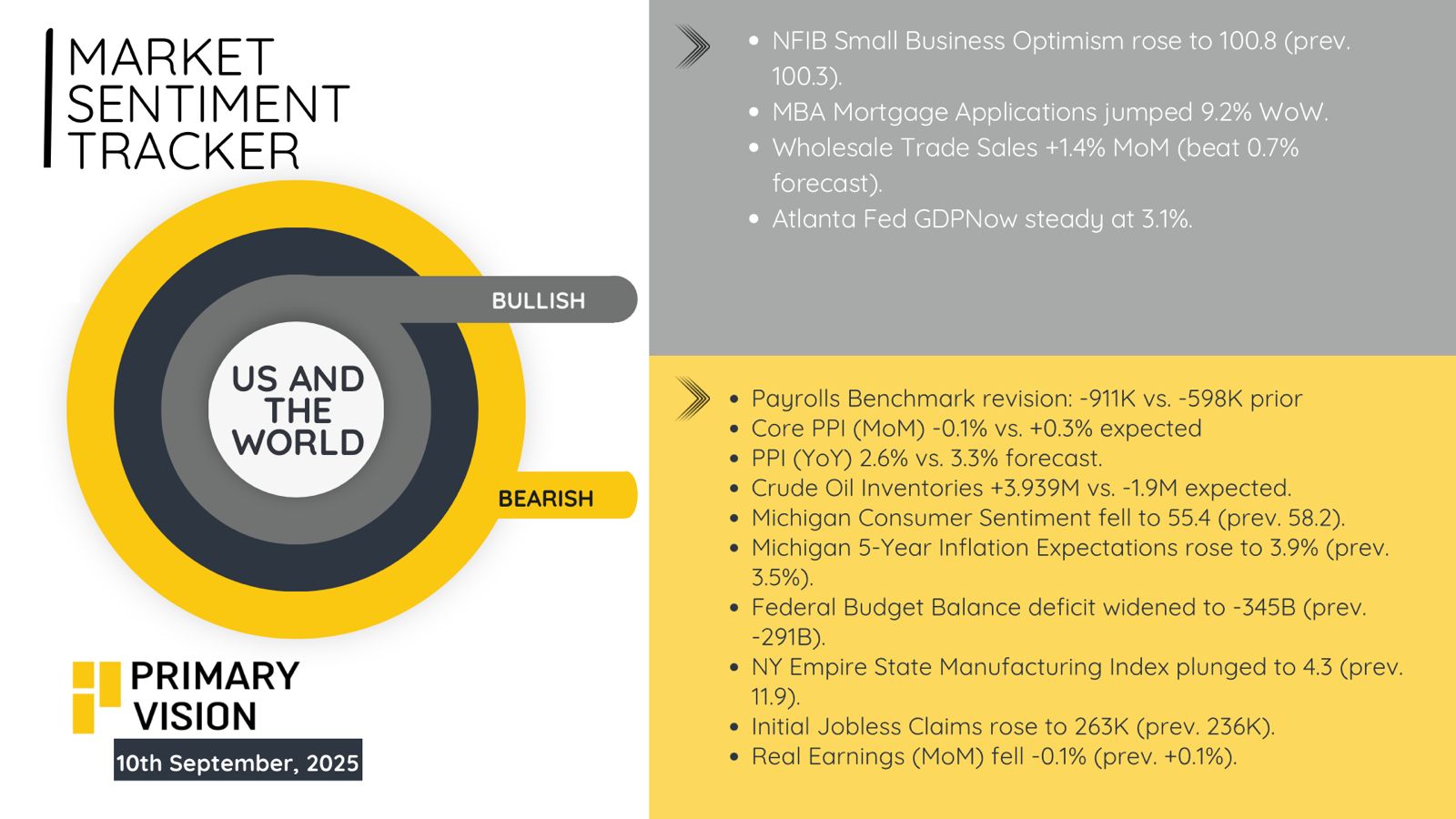
Meanwhile, the job market itself has entered a strange twilight. Analysts are calling it “low hire, low fire.” Businesses aren’t laying off workers en masse, but they’re not hiring either, and the breakeven level of new jobs needed to hold the unemployment rate steady is now significantly lower than it was just two years ago. Monthly payroll growth has slipped well under 150,000, and June’s downward revision to negative territory — a loss of 13,000 jobs — is a flashing red light historically associated with recessions. Workers’ own perceptions are catching up: the New York Fed’s Survey of Consumer Expectations shows confidence in finding a new job after a layoff at its weakest since 2013. JOLTS data confirms it too: the hiring rate is now at its lowest in over a decade, falling back to levels last seen during the post-financial crisis recovery.

The broader slowdown is feeding through unevenly. Large companies with solid balance sheets can offset tariff costs, tap global capital markets, and even benefit from tax credits. Small and midsize firms, which employ nearly half of the U.S. workforce, don’t have that cushion. The National Federation of Independent Business reports that small business optimism has fallen for three straight months, with the share of owners planning to add workers dropping to its lowest since 2010. Credit is already tightening for them: the Fed’s own Senior Loan Officer Opinion Survey shows a majority of banks reporting stricter lending standards for small business loans. Rate cuts might blunt the pain, but they won’t reverse the fact that smaller firms are most exposed to demand shocks and higher input costs.
The irony is that the Fed easing cycle might actually deepen the two-speed economy we’re living in. AI-driven investment has added as much as a full percentage point to GDP growth this year, cushioning the headline numbers. U.S. firms have poured tens of billions into data centers, cloud infrastructure, and power capacity, creating pockets of strength that disguise weakness elsewhere. That has juiced equity valuations and pushed the S&P 500 to repeated highs, but it’s not a broad-based boom. Manufacturing surveys from ISM have been in contraction territory for seven consecutive months, and freight volumes are down year-on-year. Lower rates would pour more fuel on the tech fire, but capital won’t flow as easily to cyclicals, exporters, or mom-and-pop businesses fighting higher costs.

Households face the same divide. Consumers at the top end of the income spectrum are spending freely and stand to benefit from the new tax bill set to take effect in 2026. The bottom half is in a different position. The Fed’s distributional accounts show that the lowest income quintile holds less than 3% of U.S. financial assets. They’re the ones most exposed to higher grocery bills from tariffs, rising rents, and job market insecurity. Cutting rates won’t suddenly fix the fact that wage growth has already slowed to an annualized 3.2%, down from 4.6% last year, or that inflation in essentials like food and energy is still running hotter than core measures.
Even GDP itself feels like a poor guide. The second quarter’s 3.3% rebound looked reassuring after a tariff-induced contraction in Q1, but economists are quick to point out that GDP is often revised heavily. Payroll revisions are already teaching that lesson — and many analysts, from Moody’s to Jefferies, argue that employment trends are a more reliable recession signal than output numbers. Pimco pegs recession odds at about 50/50 over the next year, while Pantheon expects growth to slow to barely 1.5% in Q3. None of these forecasts scream crisis, but they point to a fragile equilibrium where any shock — whether another round of tariffs, an oil price spike, or a geopolitical flare-up — could tip the balance.
So yes, the Fed can cut. It probably will, and markets will cheer when it does. But this isn’t a policy lever that resets the balance the way it did in past cycles. At best, it buys time. At worst, it papers over the cracks, misallocates capital, and leaves the U.S. economy more bifurcated than before. The more important question isn’t when the first cut lands — it’s whether monetary policy can do anything about the structural drags that have nothing to do with interest rates at all.
Tags:
Permission denied
Upgrade to Pro Today and get…
• This article — plus dozens more each month, all within our full Research Module
• Frac Hits — our National-Level Frac Spread Count and Frac Job Count, updated weekly
• Frac Operator Monitor — detailed FSC & FJC by operator
• And so much more, designed to help you track, forecast, and outperform