Market Sentiment Tracker: The Numbers Look Fine — So Why Does Everything Feel Off?
By
Osama
on October 14, 2025
in
Market Sentiment
The latest readings from our Market Sentiment Tracker continue to provide a grounded view of the global economic landscape—one that cuts through short-term volatility to capture the deeper shifts taking place across regions. Rather than signaling a uniform slowdown, the tracker highlights an increasingly uneven world economy, where divergent dynamics are shaping the outlook for policy, growth, and markets.
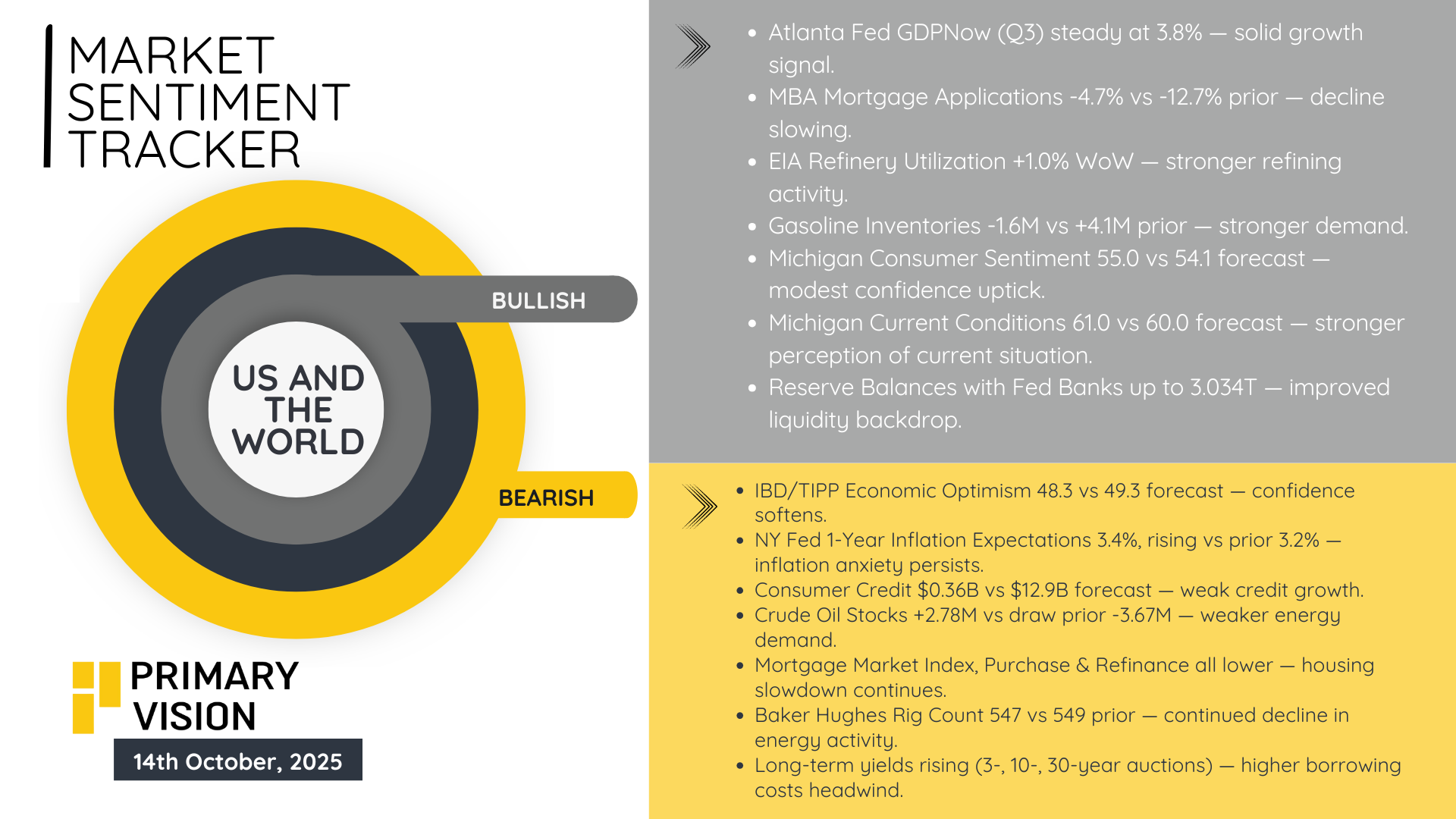
In the U.S., the latest indicators imply that growth remains above trend but is increasingly sustained by a narrow base. The fading pace of credit expansion and softer mortgage demand suggest consumption will slow in coming months, while higher inflation expectations risk delaying the Fed’s confidence in declaring victory over price pressures. Unless the labor market reaccelerates, household spending should moderate into year-end, pulling GDP growth closer to the 2–2.5% range. Markets should expect upcoming retail and housing data to soften further, and inflation prints to show only gradual easing—leaving the Fed on hold rather than cutting quickly.
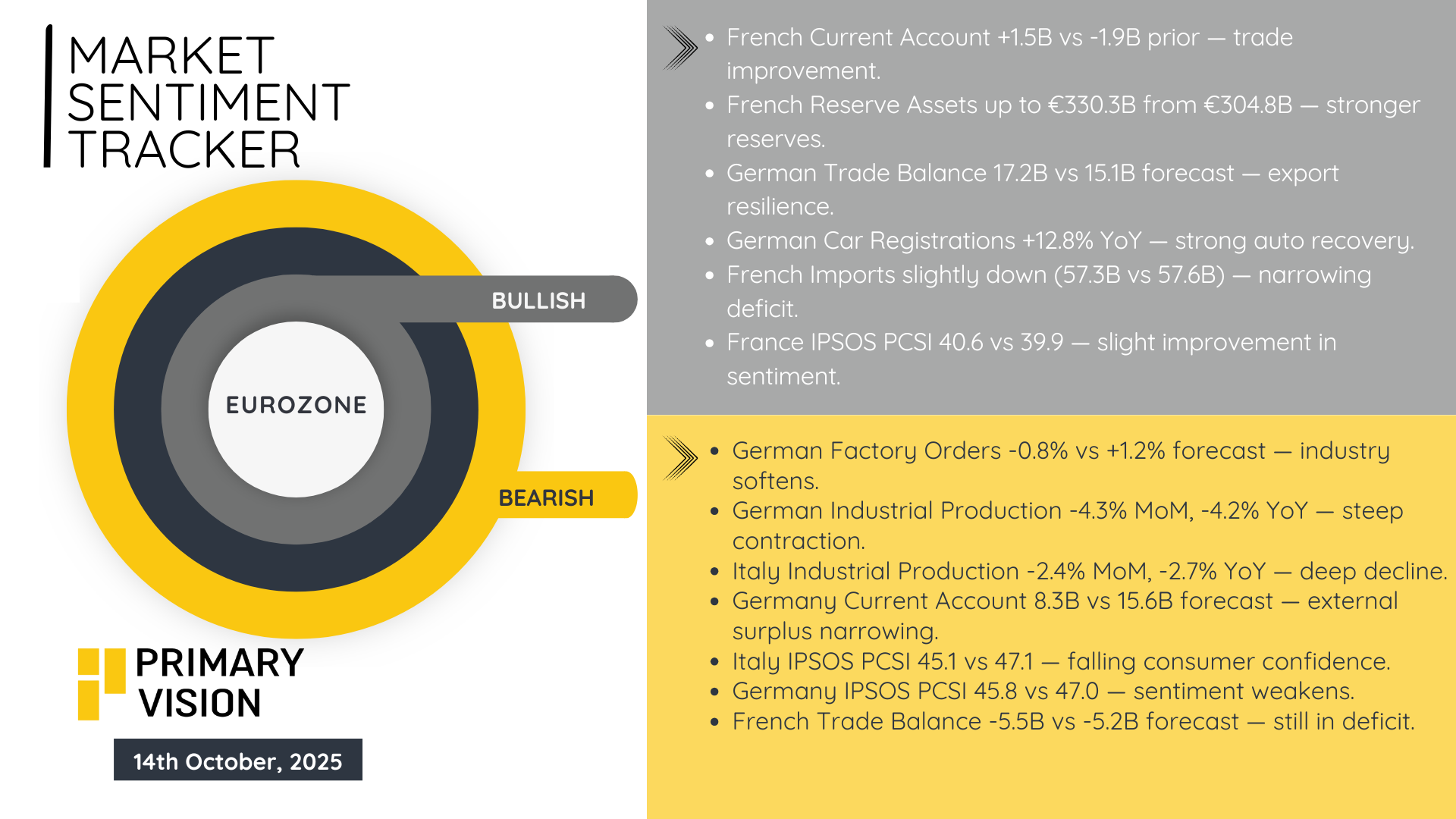
Europe’s situation is less ambiguous. The contraction in industrial output across Germany and Italy signals that the manufacturing recession is now entrenched. Even with some support from services and trade balances, overall activity is likely to stay weak. Leading surveys are pointing to further declines, and headline inflation should continue easing as energy effects fade. The ECB will welcome that trend but remains constrained from cutting rates until wage growth slows more decisively. Investors should look for another quarter of flat or slightly negative GDP, with unemployment inching higher and confidence data staying subdued. The euro area’s policy debate will soon shift from fighting inflation to managing stagnation.
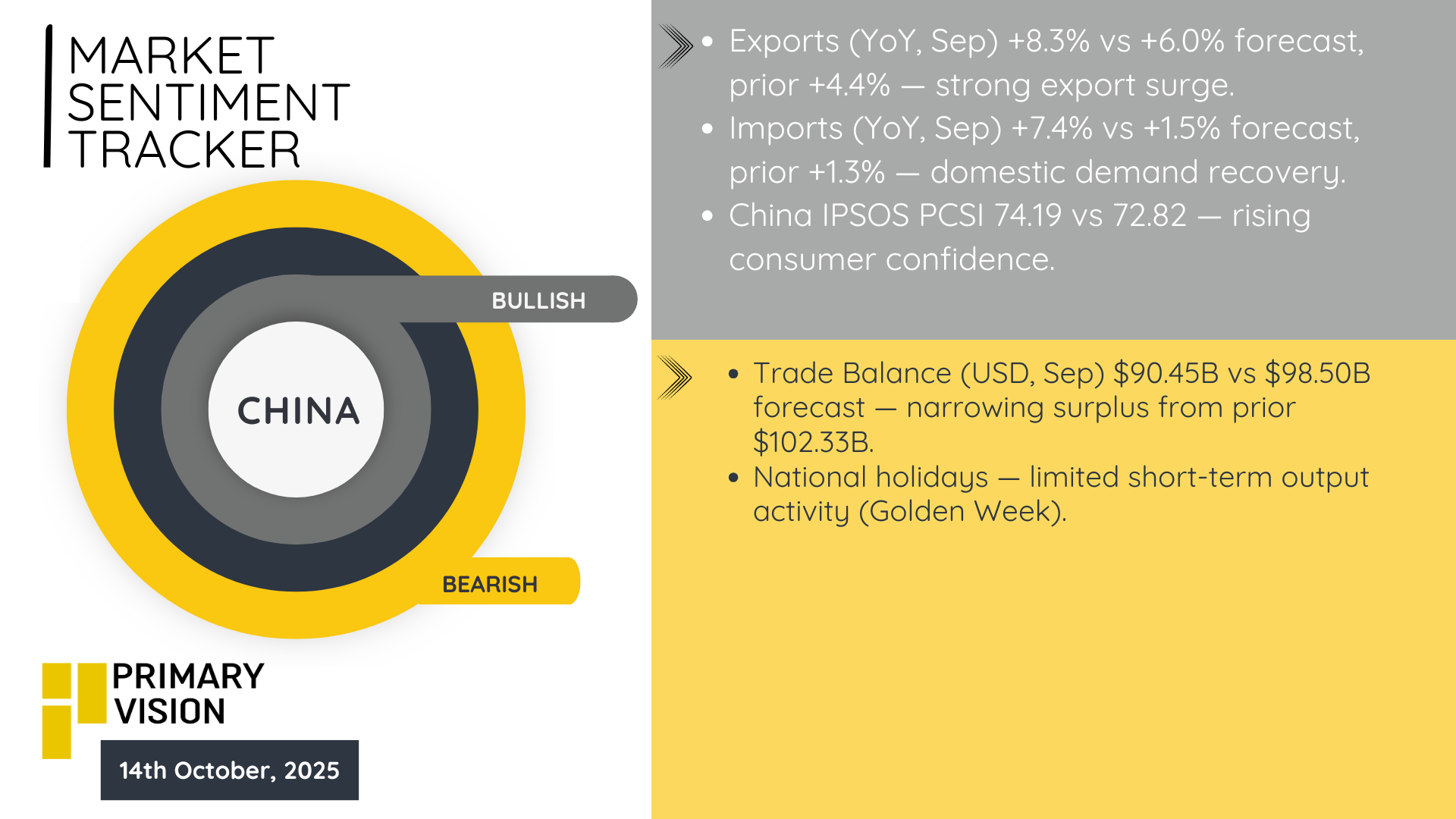
China’s momentum, by contrast, appears to be turning. The surge in exports and imports, coupled with firmer consumer sentiment, points to a floor under growth. The next set of industrial production and retail sales figures should confirm modest sequential improvement. Fiscal and credit support is filtering through, though the recovery remains policy-dependent rather than self-sustaining. The main risk is that external demand could soften again if the U.S. and Europe slow more sharply. Even so, China looks on track to deliver a mild upside surprise in fourth-quarter GDP, edging back toward the 5% target.
So what comes next isn’t about whether growth falls or rebounds—it’s about which model survives. Will the U.S. muddle through until credit breaks? Will Europe accept a new equilibrium of low growth? Can China forge a sustainable path under the weight of imbalances? The data to watch now: wage growth (not just employment), broad credit velocity (not just aggregates), real export elasticity outside major hubs. These will tell us not when the cycle ends—but how the next one begins.
Upgrade to Pro Today and get…
• This article — plus dozens more each month, all within our full Research Module
• Frac Hits — our National-Level Frac Spread Count and Frac Job Count, updated weekly
• Frac Operator Monitor — detailed FSC & FJC by operator
• And so much more, designed to help you track, forecast, and outperform