Market Sentiment Tracker: Who Is Paying for the Oil Shock?
By
Osama
on September 22, 2026
in
Market Sentiment
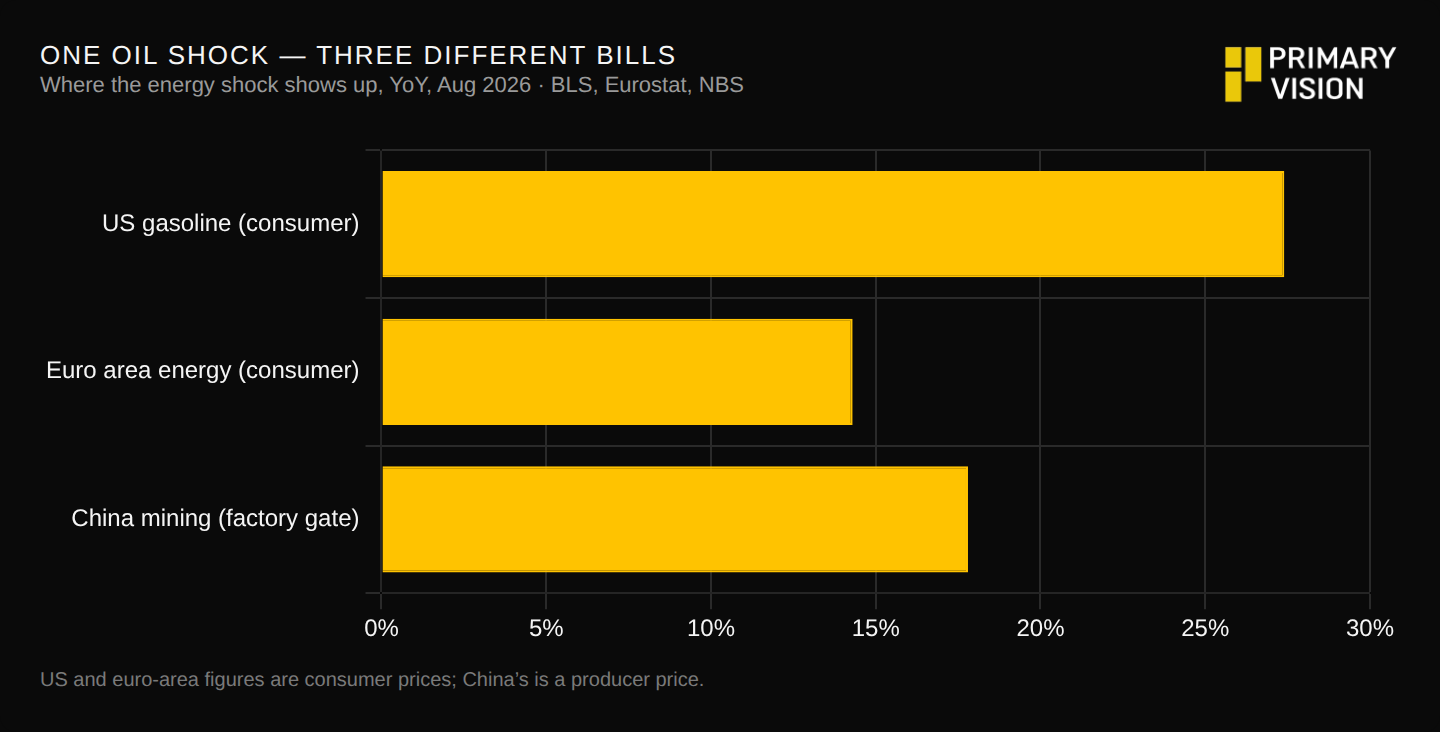
Three economies are paying for one barrel of oil, and the past week showed who each has chosen to bill. In the US, gasoline rose 27.4% over the year. In the euro area, energy inflation reached 14.3%. In China the shock sits at the factory gate, where mining prices climbed 17.8%. Following where that cost lands turns three rate decisions into one story about who gets protected.
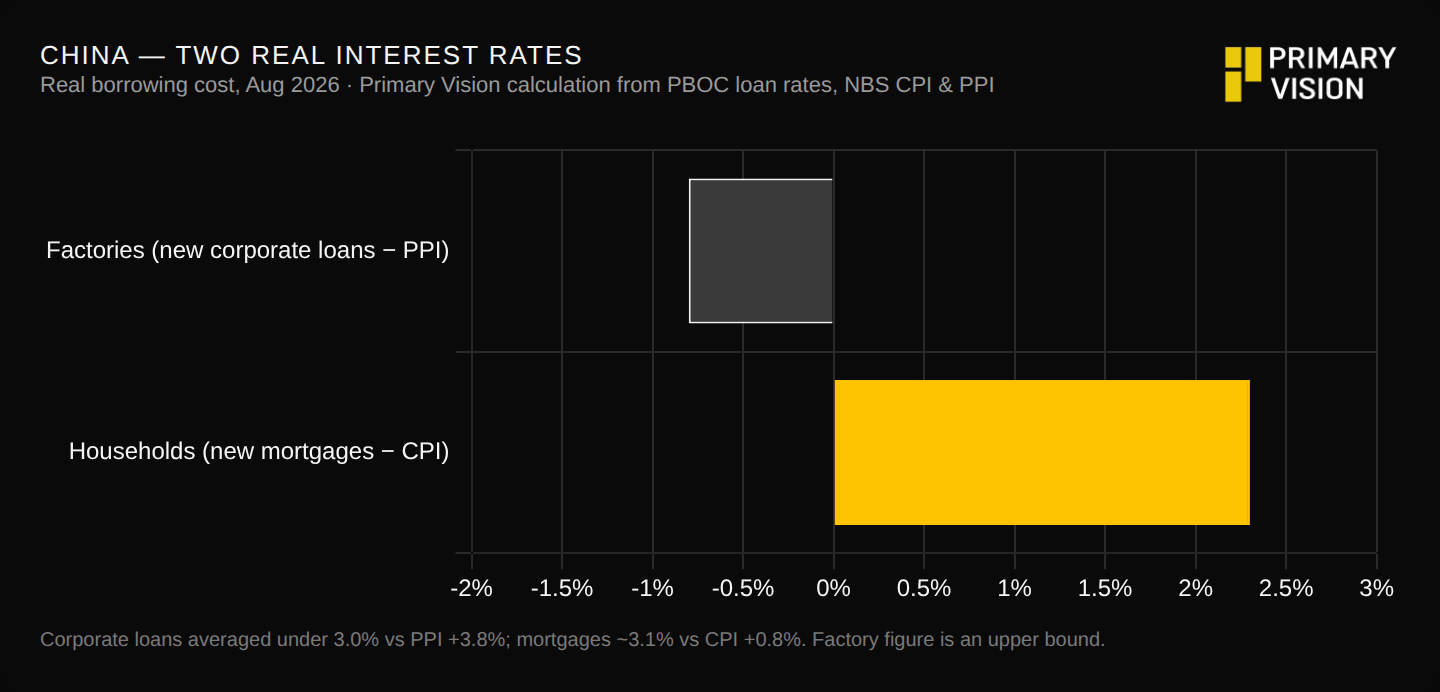
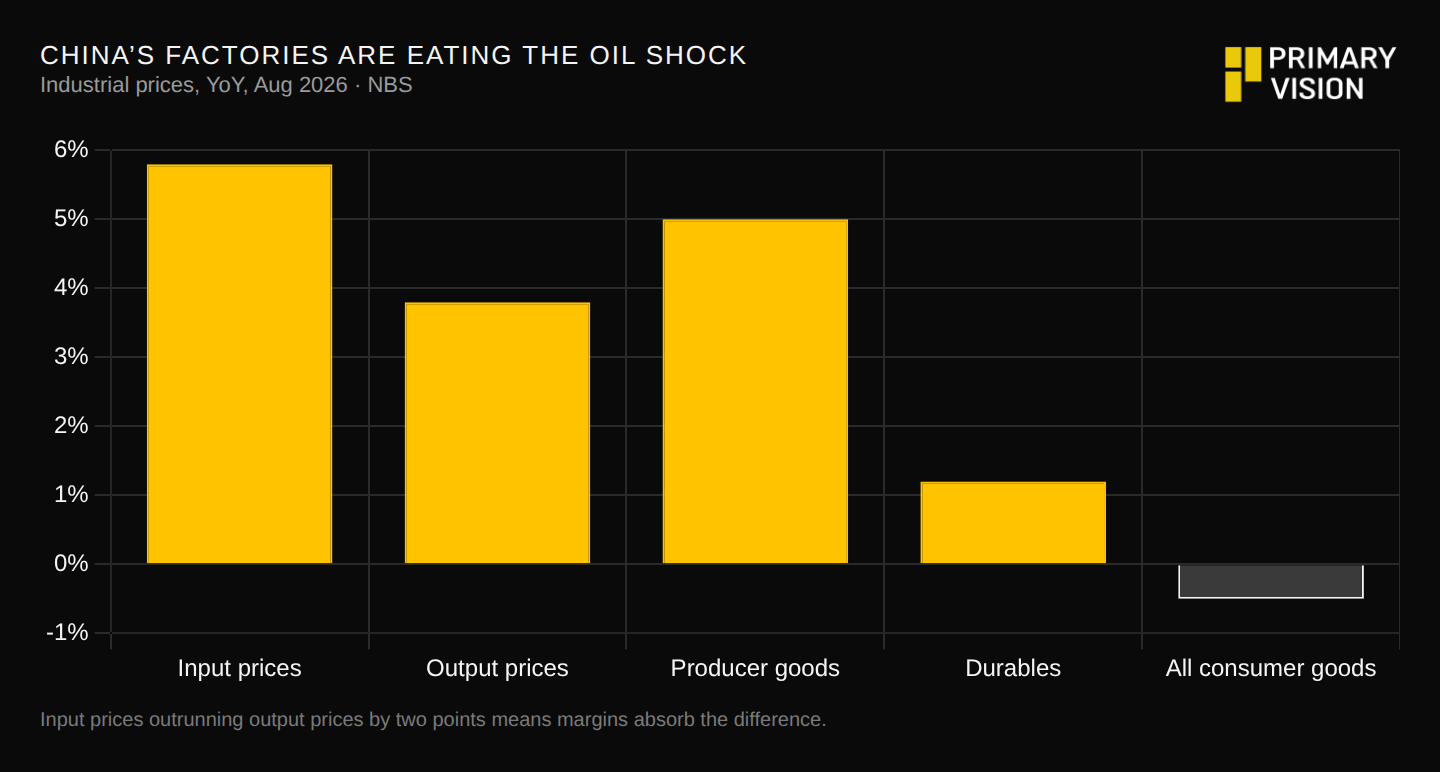
Beijing has put the cost on its factories and then compensated them for carrying it. Industrial input prices rose 5.8% against output prices of 3.8%, a two-point squeeze on margins. The compensation comes through credit. New corporate loans averaged under 3%, a real rate near minus one against producer inflation.
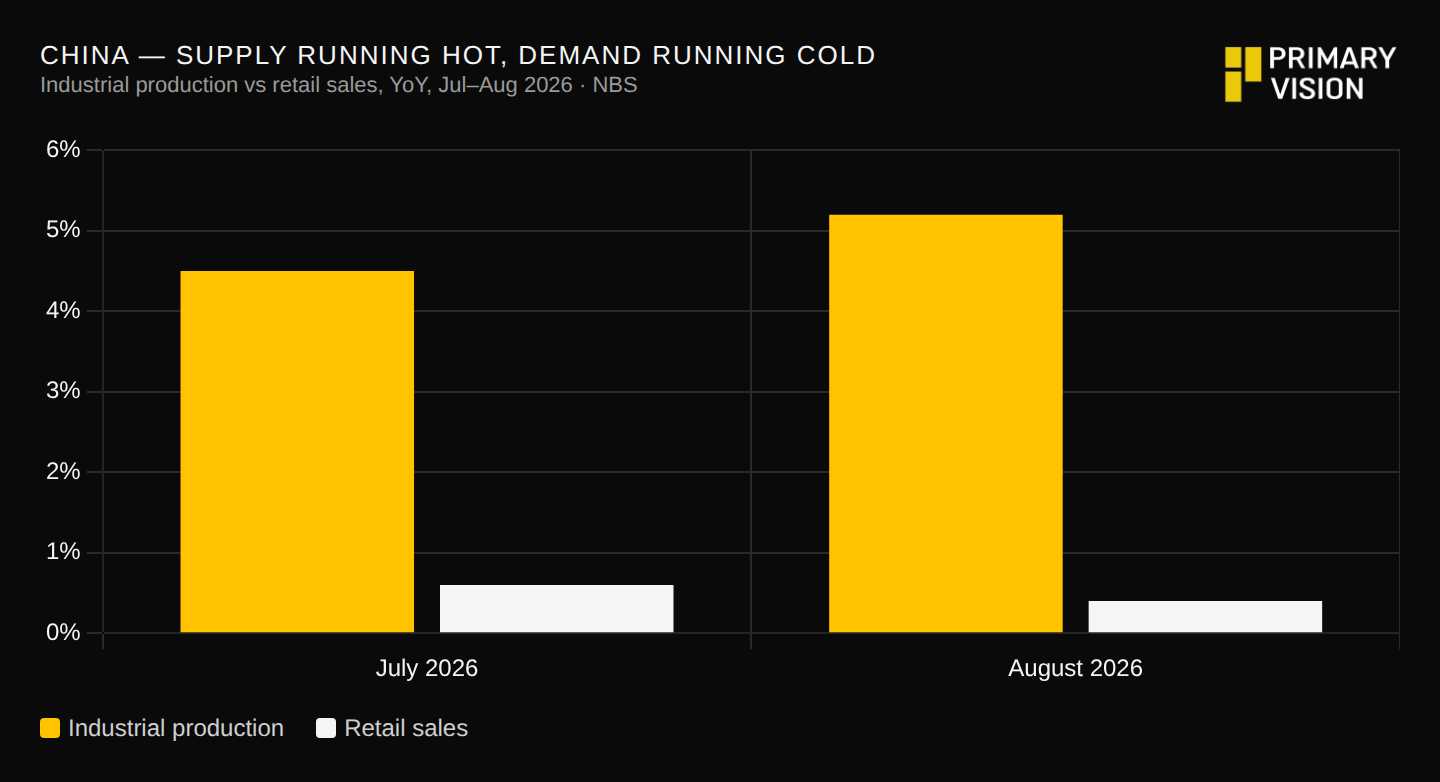
Mortgages at about 3.1%, set against consumer inflation of 0.8%, cost households plus 2.3 in real terms. That three-point gap in borrowing costs goes a long way toward explaining why industrial output grew 5.2% while retail grew 0.4%, a fall in volume once prices are counted. Vehicle sales fell 18.5% while other retail grew 2.5%, which implies cars are about a tenth of spending and took nearly two points off the total. Holding rates unchanged for sixteen months was the consistent choice, because a cut would push industry's real borrowing cost further below zero.
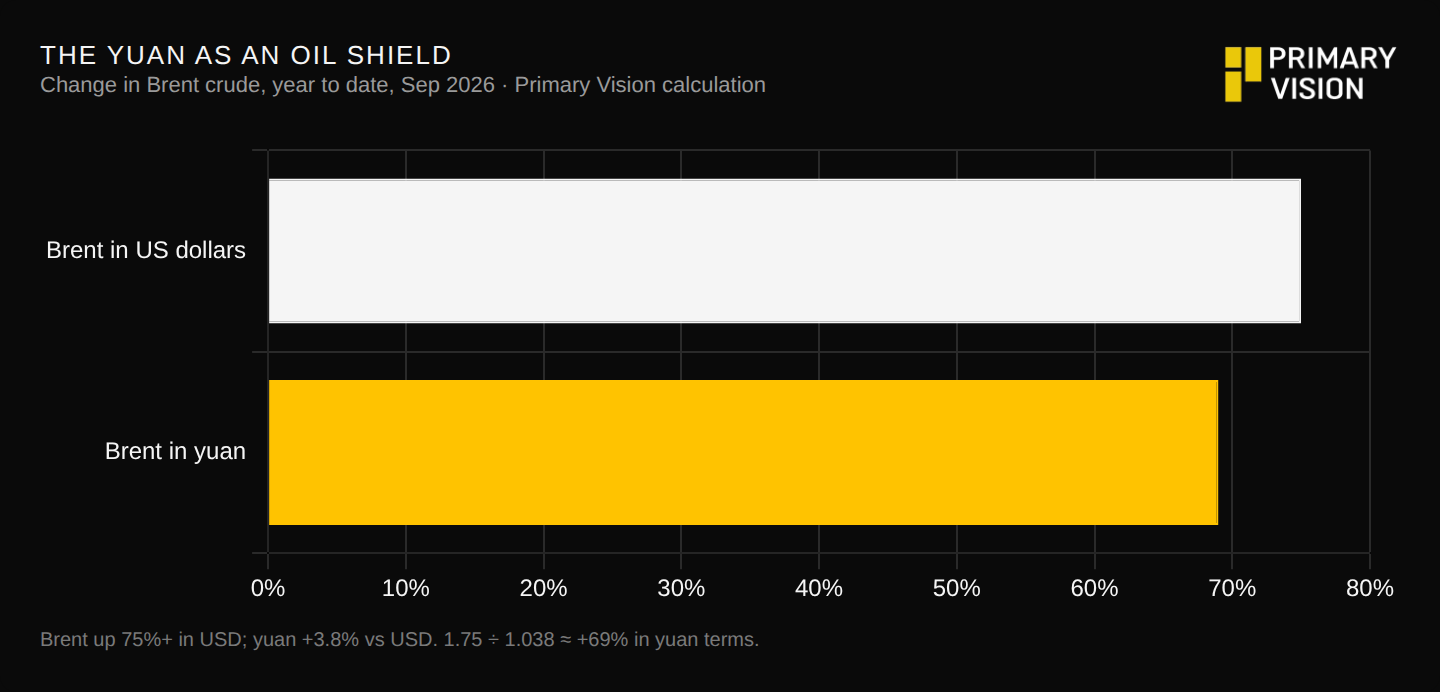
The currency serves the same purpose. Brent is up more than 75% in dollars this year, but the yuan gained 3.8% over the same stretch, so in yuan the rise is closer to 69%. A stronger currency trims about six points off the oil bill for factories whose fuel and power costs are already up 9.8%. The PBOC signalled tolerance for appreciation after the war began, reversing its earlier stance, and exporters barely noticed, with shipments up 25% in August. Cheap credit and a firmer yuan are two parts of one subsidy to industry. Households get neither, since their mortgages cost more than three points above their factories' loans in real terms.
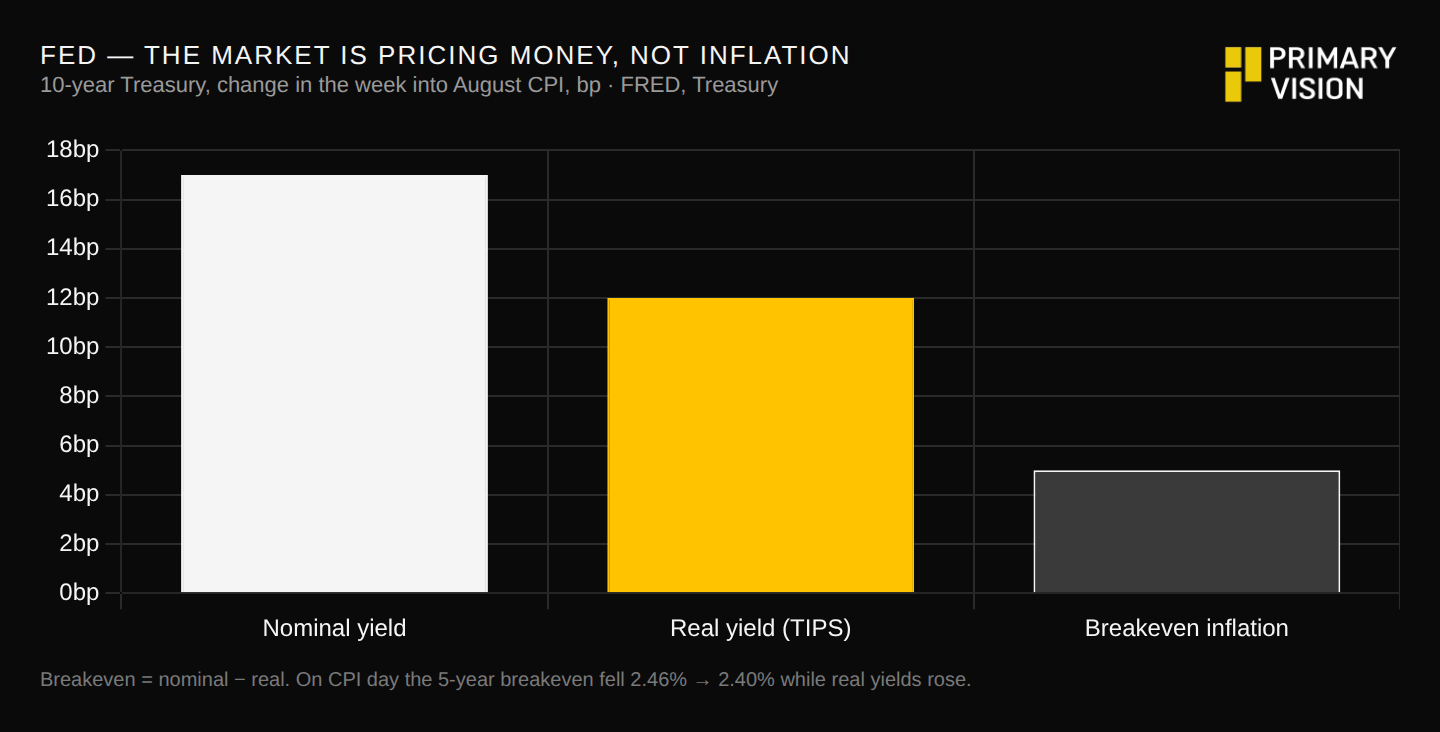
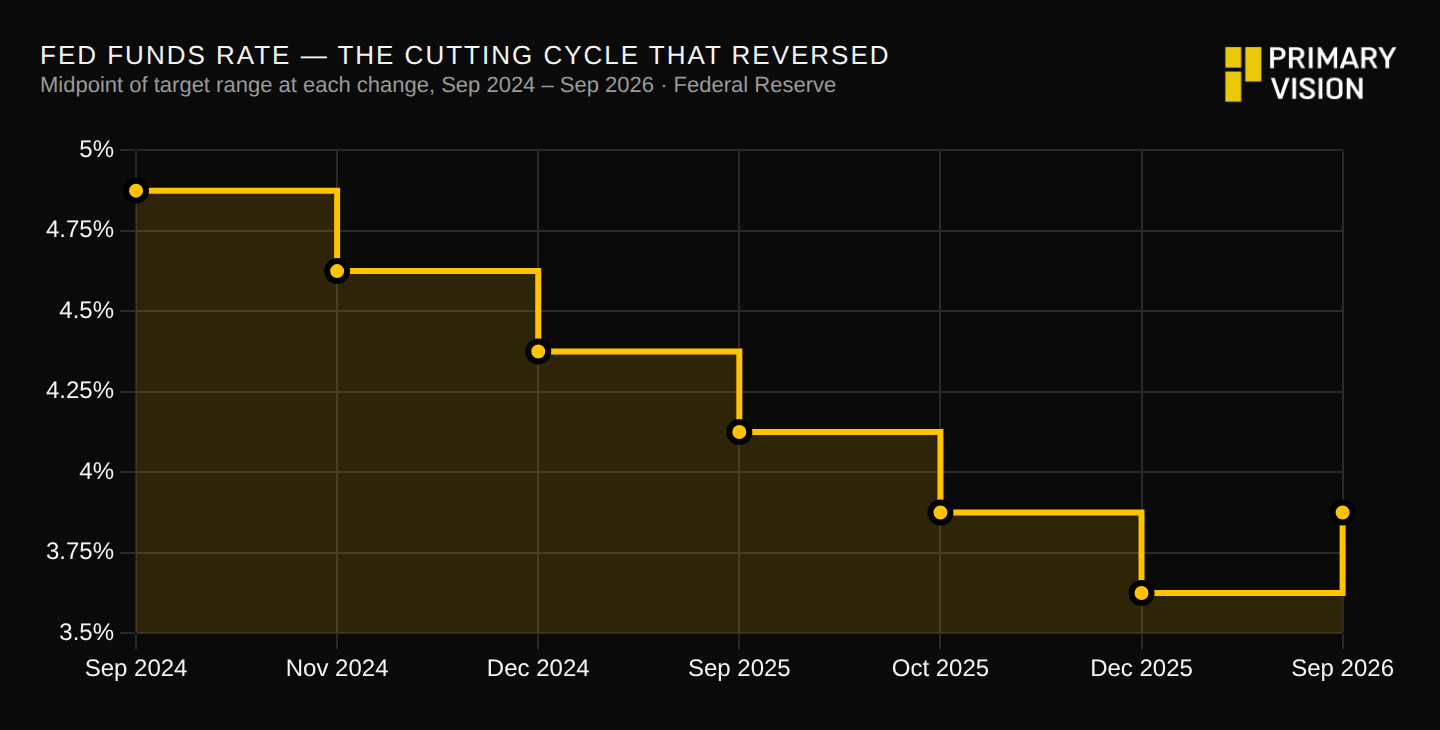
The Fed is charging American households through real interest rates. It raised rates unanimously with core inflation at a three-month annualized pace of 2.0%. The two-year yield rose from 4.44% on 9 September to a 4.76% close on 21 September. Yet on CPI day breakevens actually fell, the five-year dropping from 2.46% to 2.40%, and real yields did the rising. Markets trust the Fed on inflation and are charging more for money anyway.
The Fed's own statement calls capital investment robust, and Warsh pointed to competition for capital. Our reading is that investment demand, much of it AI-related, is bidding up the price of savings. That leaves the Fed far less tied to oil than markets assume. Oil has fallen for four straight sessions, yet the 10-year has eased only about six basis points from its 5.01% on 18 September.
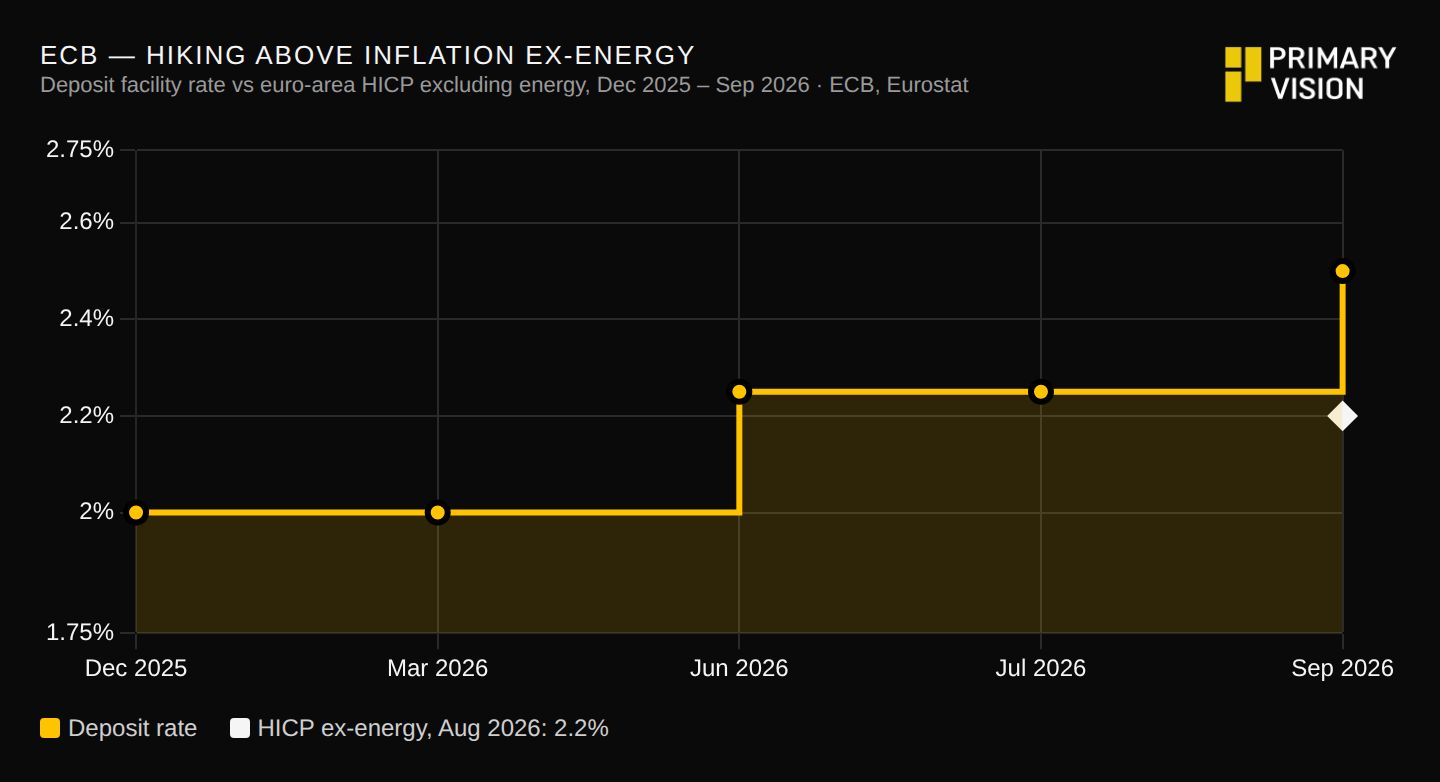
Europe is the reverse case. The ECB lifted its deposit rate 2.5% even though its flash August estimate showed services slowing to 3.0% and inflation excluding energy at 2.2%, below the new rate. Its own wage tracker points to pay growth of 2.7% into early 2027, under today's 3.2% inflation, so the energy shock is already squeezing real incomes before the ECB's tightening reaches them. With nearly all of its inflation coming from energy, the ECB is the central bank whose next move depends most on oil. The next flash estimate on 2 October will settle it.
Frankfurt's next move depends on Brent, and Washington's depends mainly on the price of capital. Beijing's depends on how long its factories can keep absorbing costs. With durable goods prices at the factory gate up 1.2%, from 0.4% a month earlier, that capacity is starting to run out.
Upgrade to Pro Today and get…
• This article — plus dozens more each month, all within our full Research Module
• Frac Hits — our National-Level Frac Spread Count and Frac Job Count, updated weekly
• Frac Operator Monitor — detailed FSC & FJC by operator
• And so much more, designed to help you track, forecast, and outperform