Market Sentiment Tracker: Is the U.S. consumer really spending?
By
Osama
on October 7, 2025
in
Market Sentiment
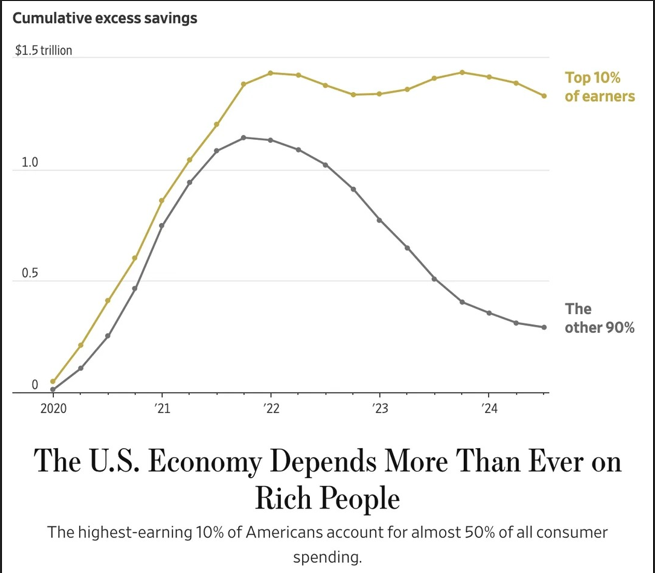
The American economy looks resilient, but its foundation is narrower than it seems. Household spending—nearly 70% of GDP—is increasingly carried by a small, wealthy slice of the population. New data shows that the top 10% of earners, roughly those making $250,000 a year or more, now account for 49.7% of all consumer spending, the highest share since records began in 1989. Three decades ago, that figure was just 36%.
This concentration changes the character of growth. In the past year alone, households in that top bracket increased their spending by around 12%, while the bottom 80% barely kept pace with inflation. The result is an economy where overall consumption can look strong even if the majority of households are effectively standing still. If those top earners cut their spending by even one percent, GDP growth could lose roughly 0.3 percentage points—enough to flip a “soft landing” into a noticeable slowdown.
And there are hints that this pivot might already be starting. Michael Sonnenfeldt, who runs Tiger 21—a network of ultra-wealthy investors managing over $150 billion—says many members are quietly shifting out of stocks and real estate and holding more cash. Not because of panic but caution. And because these households’ spending is tightly linked to asset values, even a modest dip in markets can feed through quickly to the real economy.
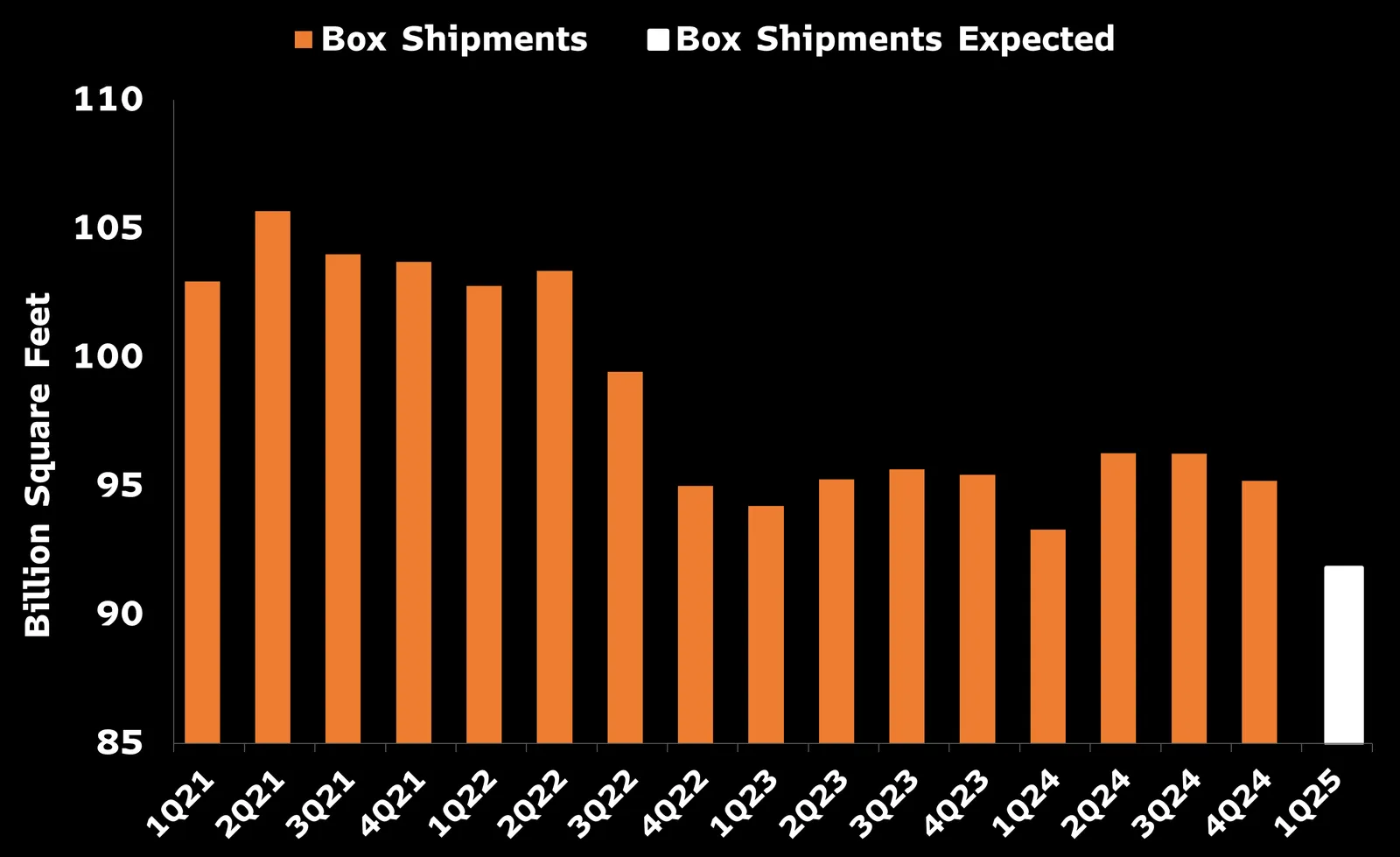
You can see signs of softening in places that rarely make headlines. One of the most reliable early indicators economists watch is the demand for corrugated cardboard—the stuff used for shipping boxes. It’s a surprisingly clear proxy for economic activity because nearly everything consumers buy, from furniture to groceries to iPhones, travels in a box before reaching them.
That signal is flashing yellow. Shipments of corrugated packaging in the U.S. were down about 5% year over year in the second quarter of 2025, according to industry data, marking the fourth straight quarterly decline. Producers have cut roughly 9% of containerboard capacity over the past eight months, a sharper contraction than anything seen since the 2009 recession. Volumes shipped to retailers are now at their lowest second-quarter level since 2015. This isn’t a quirky statistic—historically, drops of this size have preceded slowdowns in demand within six to twelve months.
Pair that with the fact that middle- and lower-income households are relying on record levels of credit card debt and buy-now-pay-later plans just to maintain spending, and the picture becomes clearer. The engine of consumption is still running, but it’s being powered by a thin layer of wealthy consumers and an undercurrent of borrowing further down the income ladder. If either of those supports weakens, the apparent strength of the economy could evaporate quickly.
The numbers don’t signal an immediate crisis. But they do show an economy increasingly exposed to shifts in confidence and asset prices among the rich, and to a mounting debt burden among everyone else. It’s a structure that works—until it doesn’t. And the quiet warning signs, from shipping boxes to portfolio rebalancing at the top, suggest we might be closer to that turning point than the headline GDP numbers imply.
But still I am not calling for a full blown recession. However, we do have precedents. Look at the job market, strong first and then weak. Oil markets will follow suit - no glut but there will be one. I expect something similar for the U.S. economy. Let's wait and watch.
Upgrade to Pro Today and get…
• This article — plus dozens more each month, all within our full Research Module
• Frac Hits — our National-Level Frac Spread Count and Frac Job Count, updated weekly
• Frac Operator Monitor — detailed FSC & FJC by operator
• And so much more, designed to help you track, forecast, and outperform