






Articles
FREE READ: Oil Is Falling. But Has the Physical Market Really Changed?
By Osama on September 23, 2026 in Free Articles
Oil prices have finally started to come down, but I am not convinced the market has earned the right to call this normalization yet.
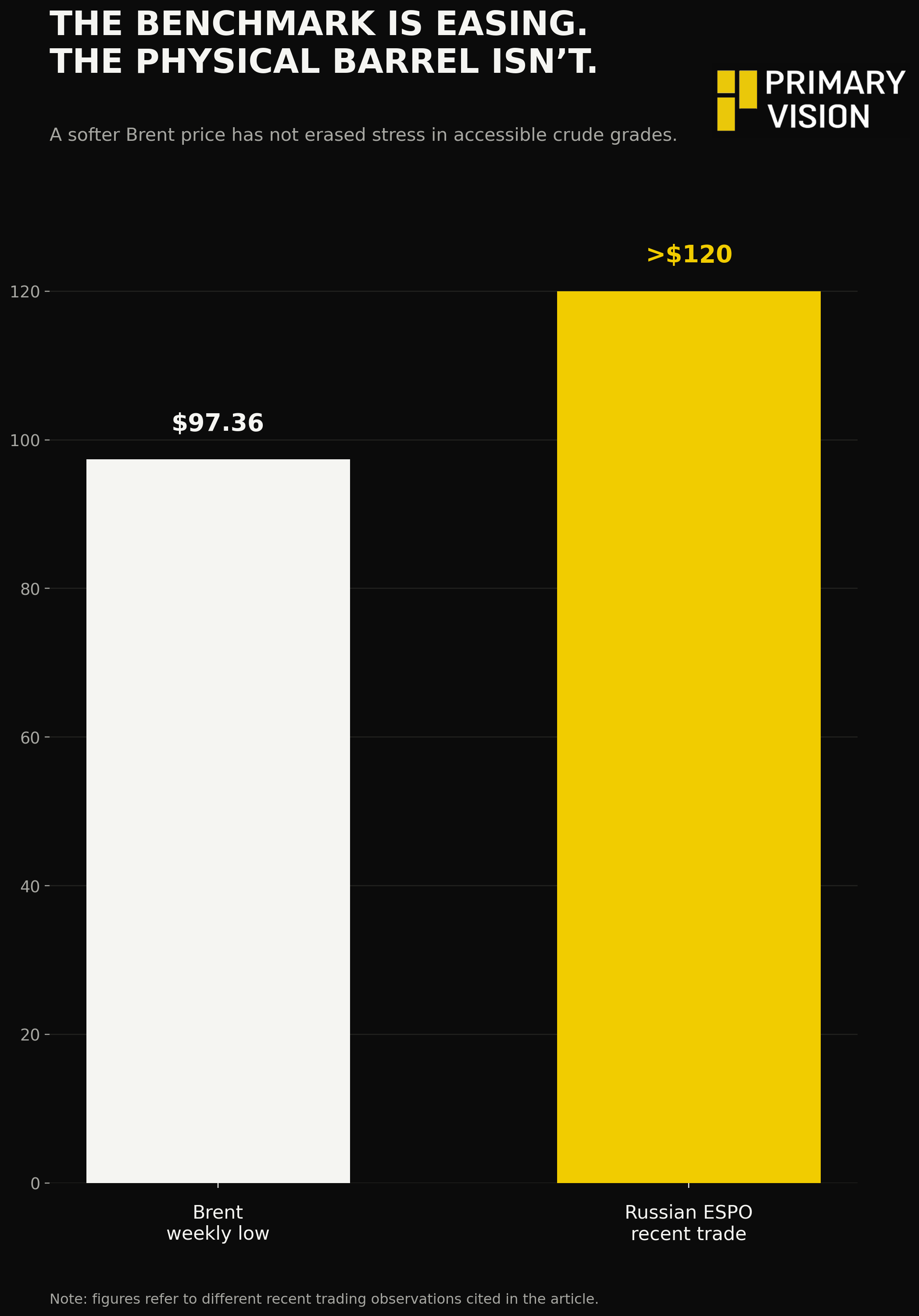
Brent slipped to $97.36 per barrel this week, its lowest level since September 8, before recovering toward $100 on Wednesday. The immediate explanation is easy enough to understand. Saudi barrels are moving again, the East-West Pipeline is operating, and there are suddenly more reasons to hope that diplomacy between Washington and Tehran may produce something meaningful. The problem is that while the futures market softened, several parts of the physical market are still behaving as though supply is anything but comfortable.
Saudi Arabia provides the clearest example. Aramco has sharply increased loadings from its Gulf terminals, with recent shipping data showing some of the busiest activity since before the disruption. Earlier reports also pointed to roughly 14 million barrels being assembled for movement on VLCCs, reinforcing the impression that Saudi export capacity is returning quickly. But increased Saudi crude loadings should not automatically be confused with the removal of the logistical problem.
Ras Tanura and Juaymah sit inside the Gulf. Barrels loaded there still have to negotiate Hormuz unless they are transferred or rerouted elsewhere. Saudi crude movements through the Strait have certainly improved, but the broader shipping environment remains far from pre-war conditions. What we are seeing is adaptation: more ships moving when opportunities emerge, ship-to-ship transfers, alternative loading points and greater use of infrastructure outside the Strait. That is evidence of resilience, not yet evidence that the constraint has disappeared.
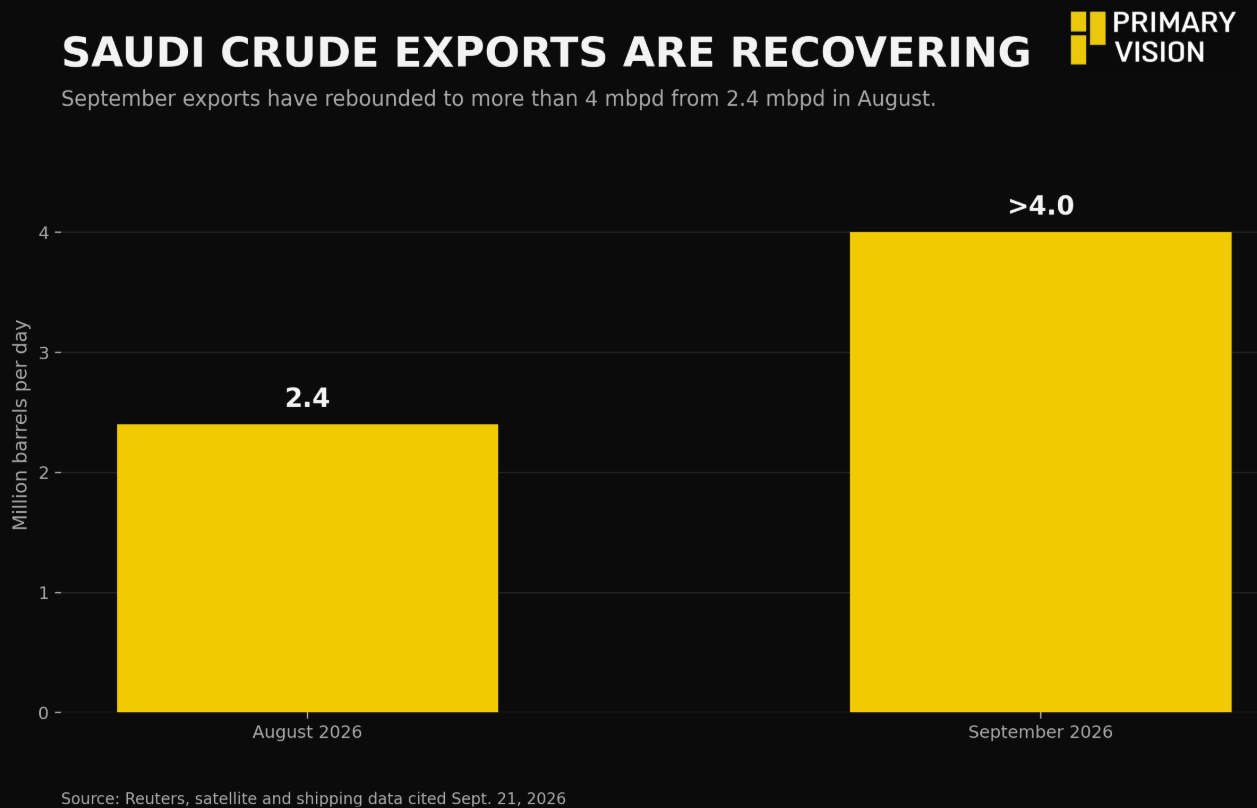
The restart of the East-West Pipeline matters for precisely this reason. It gives Saudi Arabia a route toward Yanbu and the Red Sea that bypasses Hormuz, while Aramco has also offered Asian refiners more barrels from outside the Strait. That deserves to put downward pressure on risk premiums. Yet the pipeline initially resumed at reduced rates, and restoring infrastructure is not the same as instantly restoring the global crude distribution system that existed before the attacks.
This is where the divergence becomes interesting. If crude supply were already comfortable, one would expect stress in physical grades and products to fade alongside Brent. Instead, Russian ESPO recently traded above $120 per barrel, with the ESPO premium reaching roughly $20 to $30 over Brent as Chinese refiners competed for accessible barrels. European low-sulphur gasoil has simultaneously traded at a record premium of around $95 per barrel over Brent. Those are not insignificant distortions. They are the market telling us that obtaining the right barrel, in the right location and in the right product form, remains expensive.
The next complication could come from Washington itself. President Trump has backed the idea of restricting U.S. diesel exports as domestic fuel prices remain politically sensitive. The intention is understandable, but a diesel export restriction could produce consequences well beyond the United States. Europe has become increasingly reliant on U.S. refined-product flows while Middle Eastern supplies remain disrupted. Keeping more diesel inside the United States could ease pressure locally, but it could also tighten Atlantic Basin supply, lift European prices further and eventually damage U.S. refinery economics if Gulf Coast refiners lose access to export markets.
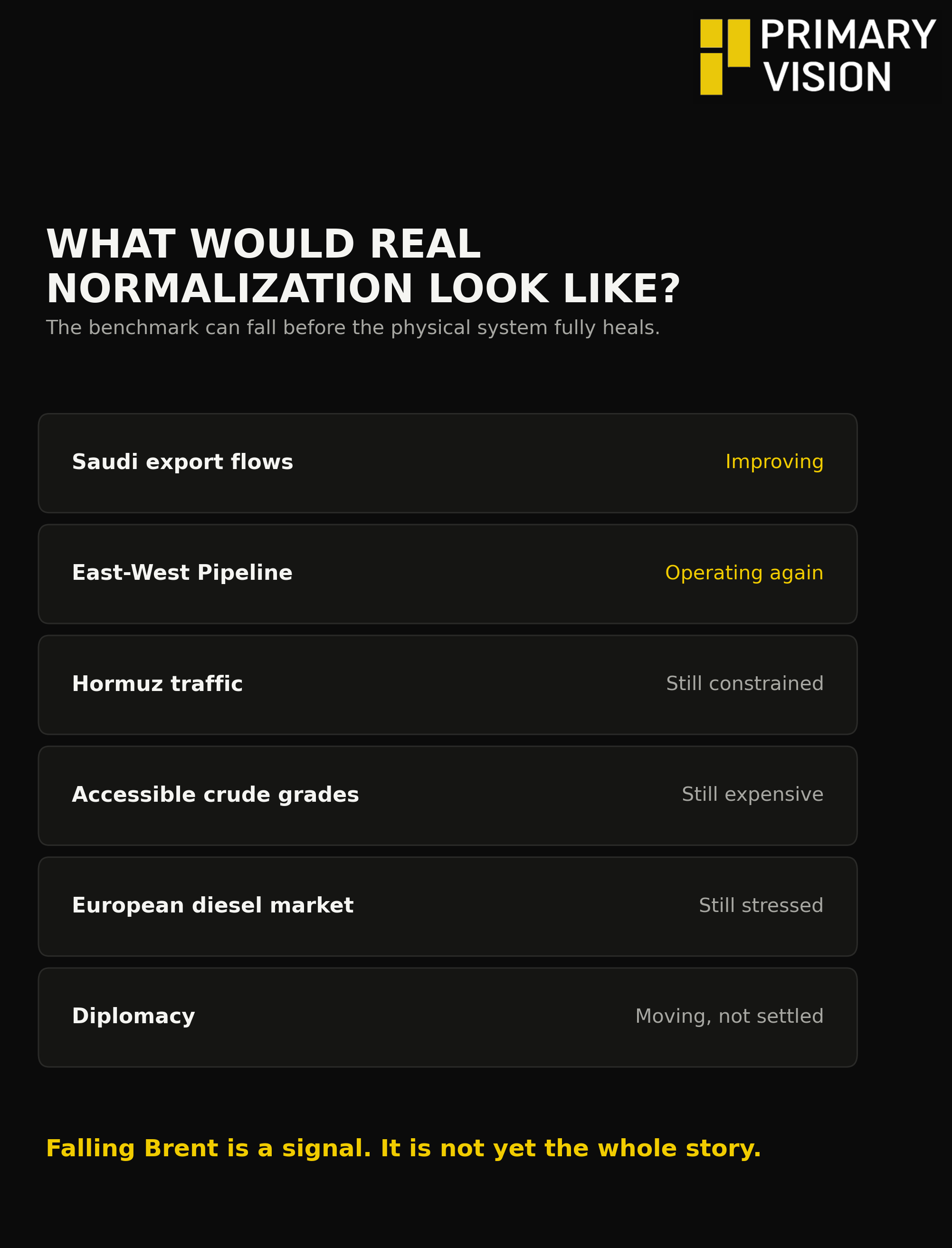
That gives us several possible paths from here. Saudi flows could continue improving, Yanbu could absorb more exports, Hormuz traffic could gradually recover and diplomacy could strip more geopolitical premium out of crude. Alternatively, another attack on infrastructure or renewed disruption around Hormuz could reverse the recent move almost immediately. There is also a third possibility that should not be ignored: crude benchmarks may continue falling while freight, physical grades and refined products remain structurally expensive. This is why I think it is still too early to make a confident call on oil prices.
There are at least some reasons to watch diplomacy more closely than we have in recent months. Trump said this week that talks with Iran were continuing and expressed confidence that a settlement could eventually be reached. Iran has separately signalled that Hormuz could reopen within days if U.S. military pressure and restrictions on Iranian ports were eased. Regional players are also becoming increasingly vocal about maritime security and a diplomatic resolution.
Something is moving. Whether it becomes a settlement is impossible to know yet, and the gap between diplomatic signalling and physical normalization could remain wide even if negotiations improve. For now, therefore, falling Brent deserves attention, but it should not be mistaken for the end of the story. The financial market is beginning to price better outcomes. The physical market is still demanding a premium for the possibility that those outcomes do not arrive.
Tags: